Australia's Most Embarrassing Military Defeat Came at the Hands of Flightless Birds
Most countries lose wars to other nations, insurgent groups, or at least something with opposable thumbs. Australia managed to lose a war to birds. Not just any birds — flightless birds that can't even fly away from machine gun fire. This is the story of the Great Emu War of 1932, a military campaign so spectacularly unsuccessful that it's become one of history's most entertaining examples of how nature can humble human ambition.
When Farmers Declared War on Nature
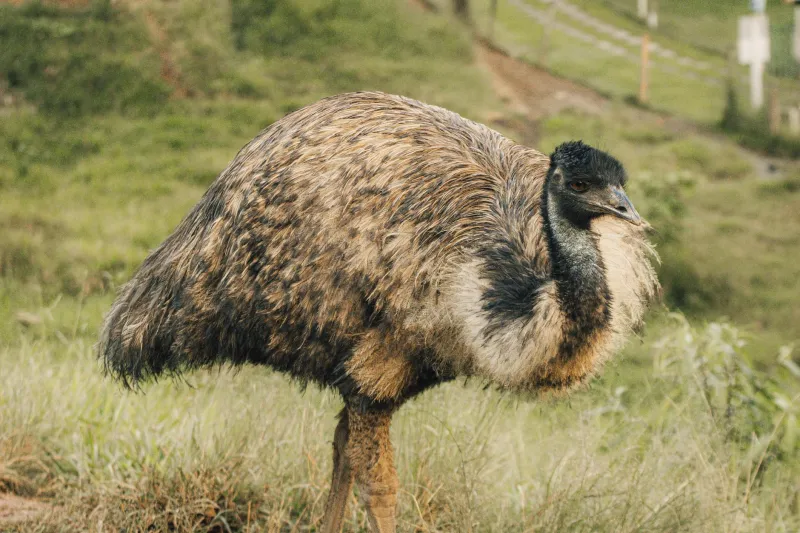
The trouble started in Western Australia, where World War I veterans had been granted farmland as part of a soldier settlement scheme. These men had survived the trenches of Europe, but nothing had prepared them for what emerged from the Australian bush in 1932: an estimated 20,000 emus marching across their wheat fields like a feathered invasion force.
 Photo: Western Australia, via www.snorkeling-report.com
The emus weren't being malicious — they were simply following ancient migration patterns, searching for water during a particularly harsh drought. Unfortunately, their route led them directly through thousands of acres of newly cultivated farmland, where they proceeded to demolish crops with the efficiency of living lawn mowers.
Farmers watched helplessly as their entire harvests disappeared into the gullets of six-foot-tall birds that seemed immune to conventional deterrents. Fences were useless — emus could leap over them or simply run through them. Scarecrows were ignored. Even gunfire only seemed to scatter the birds temporarily before they regrouped and resumed their agricultural assault.
The Military Gets Involved
By October 1932, the situation had become so dire that farmers petitioned the government for military assistance. In what might be history's strangest deployment order, the Australian government agreed to send in the army to combat the emu menace.
Major G.P.W. Meredith of the Royal Australian Artillery was assigned to lead the operation, armed with two Lewis machine guns and 10,000 rounds of ammunition. The plan was simple: locate the emu concentrations and eliminate them with superior firepower. What could possibly go wrong?
Meredith approached the mission with military precision, treating the emus like any other enemy force. He established observation posts, planned strategic strikes, and prepared to demonstrate the superiority of human technology over bird brain. The press covered the deployment with the kind of excitement usually reserved for actual wars.
The Birds Fight Back
The first engagement took place on November 2, 1932, near Campion. Meredith's forces spotted a group of about 50 emus and prepared for what they assumed would be a turkey shoot — except with emus. The machine gunners took aim and opened fire.
The results were immediately disappointing. Despite the devastating firepower, only a handful of birds fell. The rest scattered in all directions, moving with a speed and unpredictability that made them nearly impossible to target effectively. Emus, it turned out, could run at speeds of up to 30 miles per hour and change direction on a dime.
Over the following days, the pattern repeated itself with increasingly frustrating results. The emus seemed to develop tactical awareness, splitting into smaller groups that were harder to target and avoiding open areas where the machine guns could be effective. Some observers swore the birds had learned to stay just outside the weapons' effective range.
A War of Attrition
As the campaign dragged on, it became clear that the emus had several significant advantages. They knew the terrain intimately, could survive on minimal food and water, and had no supply lines to protect. The military, meanwhile, was burning through ammunition at an alarming rate while achieving minimal casualties among the enemy forces.
Major Meredith's reports back to headquarters read like dispatches from a conventional war zone, except the enemy was described in terms usually reserved for wildlife documentaries. He noted the emus' "guerrilla tactics" and their ability to "withdraw in good order" when under fire.
The press began to take notice of the military's struggles. Newspapers started running headlines about the "War Against the Emus" with a mixture of amusement and disbelief. International media picked up the story, turning Australia's agricultural pest control operation into a global laughingstock.
Strategic Withdrawal
After six days of combat, the military had expended 2,500 rounds of ammunition and killed an estimated 50 emus — a kill ratio that would make any accountant weep. Meanwhile, the emu population seemed largely unaffected, and the birds continued their agricultural rampage across Western Australia.
On November 8, 1932, Major Meredith received orders to withdraw his forces. The official reason was that the operation had achieved its objectives, but everyone understood the truth: the Australian military had been defeated by flightless birds.
The emus had won through a combination of superior mobility, knowledge of local terrain, and what appeared to be tactical intelligence. They had faced down machine gun fire and emerged victorious, making them perhaps the only army in history to defeat a modern military force without using any weapons more sophisticated than beaks and claws.
The Aftermath of Feathered Victory
The Great Emu War became an immediate source of national embarrassment and international amusement. Military historians struggled to categorize a conflict where the enemy forces were listed in field guides rather than intelligence reports.
Farmers eventually resorted to more conventional pest control methods, including bounty systems that proved far more effective than military intervention. The emu population remained largely intact, and the birds continued their seasonal migrations, presumably unaware that they had achieved one of the most unlikely military victories in modern history.
Lessons from the Battlefield
The Great Emu War stands as a reminder that superior technology doesn't always guarantee victory, especially when facing an enemy that doesn't follow conventional rules of engagement. The emus succeeded because they were fighting on their own terms, in their own environment, with tactics that had been refined by millions of years of evolution.
Today, the conflict is remembered more as comedy than tragedy, but it raises serious questions about humanity's relationship with nature. Sometimes the most sophisticated solutions fail where simpler approaches might succeed, and occasionally, the best military strategy is to admit that some battles aren't worth fighting.
In the end, Australia learned that when it comes to warfare, having wings isn't always necessary — sometimes, having the right attitude and knowing when to run is enough to defeat an entire army.