When Money Disappeared from Main Street
By the winter of 1932, the small mining town of Silverton, Colorado, faced a problem that no amount of mountain grit could solve: they had run completely out of money. Not metaphorically out of money—literally out of physical currency. The last functioning bank had shuttered six months earlier, taking with it the town's entire cash supply. What remained were 847 residents, a handful of struggling businesses, and the peculiar challenge of keeping a community alive without a single dollar changing hands.
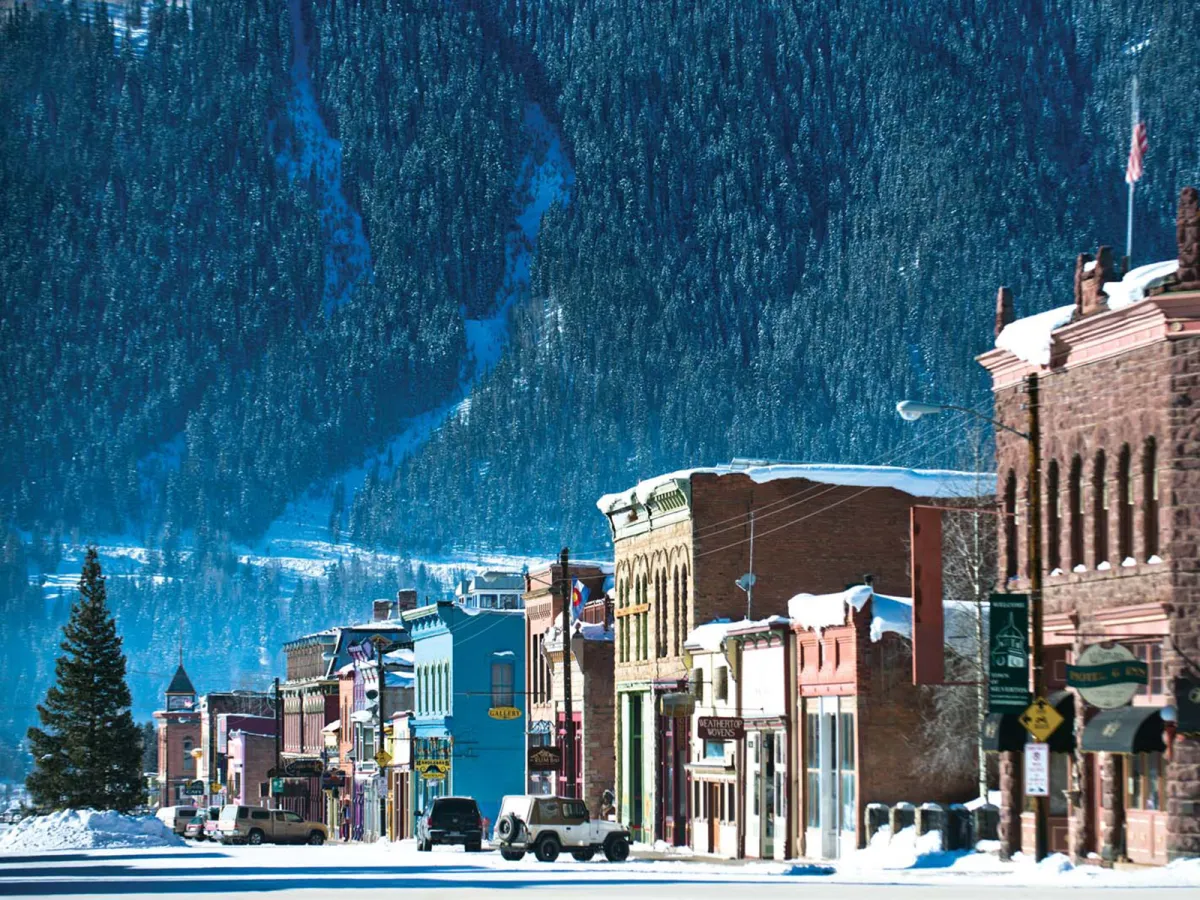 Photo: Silverton, Colorado, via cdn.5280.com
What happened next would create one of the most elaborate underground economies in American history—and inadvertently violate several federal laws that wouldn't be discovered until decades later.
The Ledger That Replaced Legal Tender
The solution emerged from an unlikely source: Martha Hendricks, the 62-year-old proprietor of Hendricks General Store. Faced with customers who needed supplies but had no money to pay for them, she proposed something radical: a formal barter exchange system that would treat every transaction like a carefully balanced equation.
 Photo: Hendricks General Store, via www.thegourmetbachelor.com
"We still had work that needed doing and goods that needed trading," Hendricks wrote in her journal, which survived in the town's historical archives. "We just needed to figure out how to make it all add up without cash."
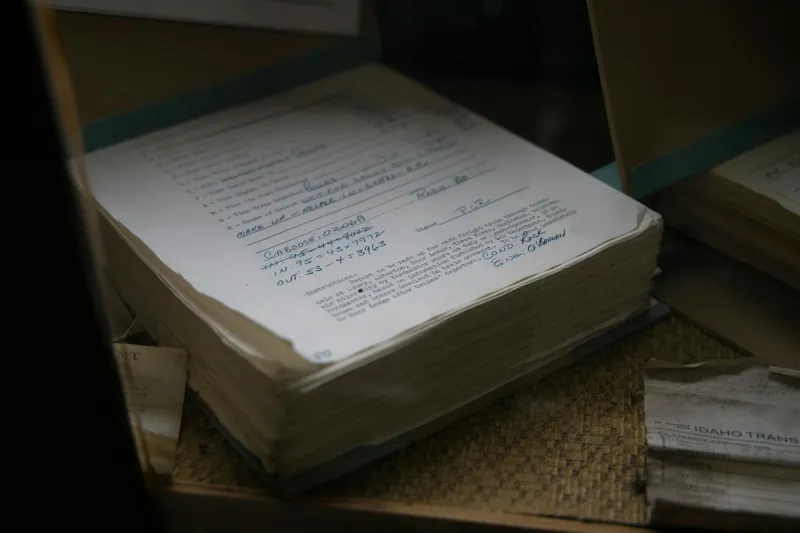
Hendricks transformed her store into the town's unofficial Federal Reserve, maintaining a massive handwritten ledger that tracked every exchange. Dr. Patterson's medical services were valued at three hours of carpentry work. A haircut equaled two pounds of potatoes. School tuition could be paid with firewood, seamstress services, or livestock maintenance.
The Arithmetic of Survival
The system grew increasingly sophisticated as winter deepened. Hendricks developed conversion rates for dozens of services and goods, creating what economists would later recognize as a complete parallel currency. A standard "work unit"—roughly equivalent to one hour of general labor—became the baseline for all transactions.
The town barber, Jim Sullivan, traded haircuts for everything from dental work to piano lessons for his daughter. The local doctor accepted payment in the form of house repairs, meal preparation, and even snow removal. The schoolteacher, Miss Caroline Foster, received her salary through a complex arrangement involving food deliveries, clothing mending, and heating coal.
"It was like running a giant puzzle where every piece had to fit perfectly," recalled Tommy Morrison, one of the few surviving residents, in a 1987 interview. "Mrs. Hendricks spent hours every night making sure the books balanced."
The Rules Nobody Knew They Were Breaking
What the residents of Silverton didn't realize was that their ingenious survival system was quietly violating several New Deal monetary policies that had been hastily enacted in Washington. The Emergency Banking Act of 1933 included obscure provisions about alternative currency systems, while various agricultural adjustment programs contained language that technically prohibited large-scale barter arrangements.
The town's system also ran afoul of federal tax collection requirements. Since no cash was changing hands, no sales taxes were being collected. No income was being reported to the Internal Revenue Service. For all practical purposes, Silverton had accidentally seceded from the American monetary system.
When Washington Finally Noticed
The federal government remained blissfully unaware of Silverton's experiment until late 1933, when a Treasury Department auditor arrived to investigate why the town had reported zero taxable transactions for an entire fiscal year. What he found defied every assumption about how American commerce was supposed to function.
"I expected to find a ghost town," the auditor, Harold Fitzgerald, wrote in his official report. "Instead, I found a thriving community that had somehow figured out how to operate without money. It was like discovering a lost tribe that had independently invented the wheel."
Fitzgerald's investigation revealed the full scope of Silverton's barter economy. The town had successfully educated its children, maintained public services, and even completed infrastructure improvements—all without a single dollar in circulation. The general store's ledger contained over 3,000 individual transactions representing goods and services worth an estimated $47,000 in contemporary currency.
The Bureaucratic Dilemma
Fitzgerald's report created a minor crisis in Washington. Treasury officials found themselves facing an unprecedented question: how do you prosecute an entire town for violating monetary laws when their violations had actually prevented economic collapse?
The situation was further complicated by the political realities of the Depression. Silverton's success story was exactly the kind of American ingenuity that New Deal politicians wanted to celebrate. Prosecuting the town for being too resourceful would have been a public relations disaster.
The Quiet Resolution
After months of internal debate, federal authorities chose the path of bureaucratic amnesia. Treasury Secretary Henry Morgenthau Jr. quietly issued a memo classifying the Silverton situation as a "temporary emergency measure" that would be overlooked in the interest of "community stability."
The town was required to transition back to cash transactions by the end of 1933, which they did as mining operations slowly resumed and banks reopened. But officials made it clear that similar future arrangements would not be tolerated.
"We're not in the business of prosecuting people for surviving," one Treasury official privately acknowledged. "But we can't have every town in America deciding to invent their own currency."
The Legacy of Ledger Economics
Silverton's year-long experiment became a quietly studied case among economists and policy makers. The town's success demonstrated both the resilience of local communities and the sometimes arbitrary nature of federal monetary controls.
Martha Hendricks kept her famous ledger until her death in 1954, occasionally showing it to visitors as a curiosity from harder times. The leather-bound book, with its careful columns of trades and exchanges, represented something remarkable: proof that American communities could reinvent their entire economic system when survival demanded it.
Today, Silverton operates like any other small mountain town, with cash registers and credit card machines in every business. But for one remarkable year during America's darkest economic period, it proved that sometimes the most radical solutions come from the most ordinary people—even when those solutions technically break the law.