The Plow Strike That Changed History
James Ford was having a frustrating morning in 1932. The farmer was working his field near Epps, Louisiana, when his plow struck something solid beneath the Mississippi River delta soil. Expecting another annoying rock that would need digging out, Ford instead found himself staring at carved stone that clearly wasn't natural.
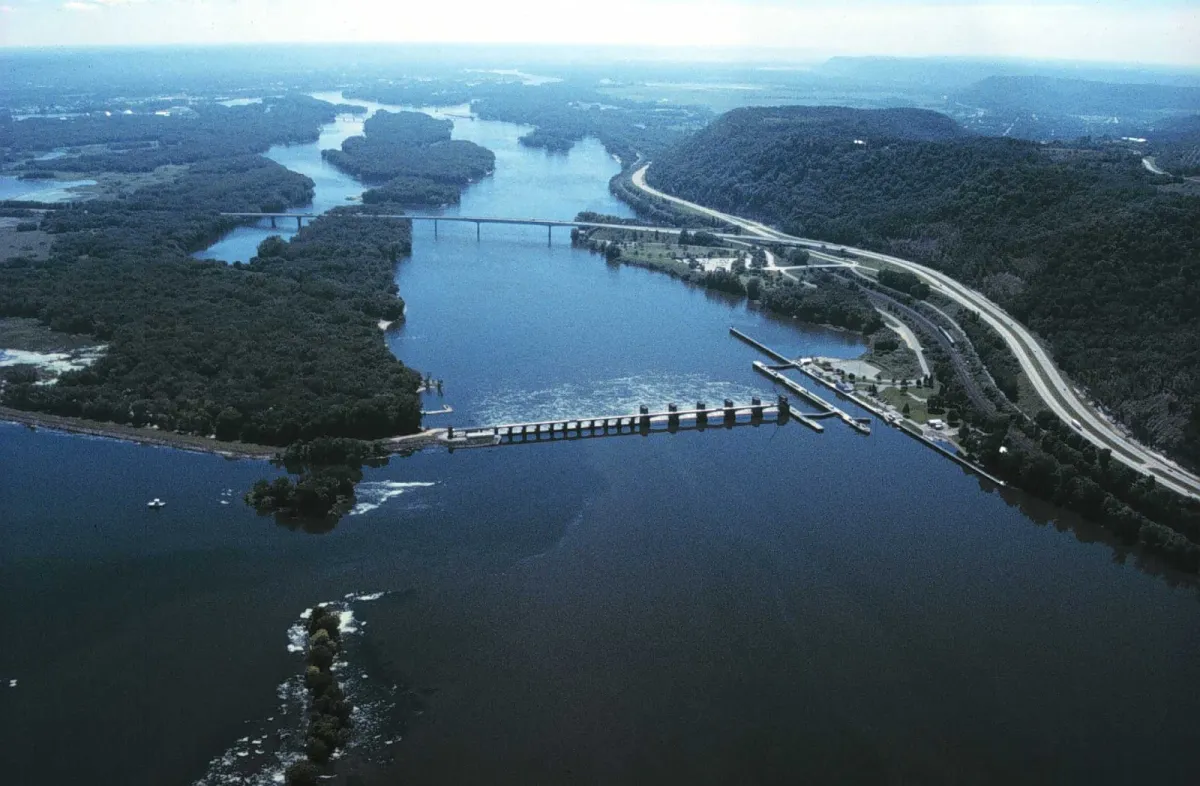 Photo: Mississippi River, via 4.bp.blogspot.com
What Ford had accidentally discovered would revolutionize understanding of pre-Columbian North America. Beneath his cotton field lay Poverty Point—a massive, sophisticated city built between 1700 and 1100 BCE, making it older than Rome and roughly contemporary with the height of ancient Egypt.
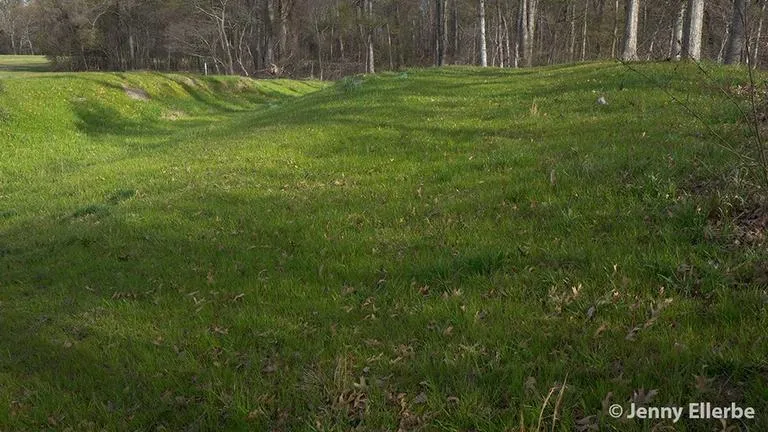 Photo: Poverty Point, via www.povertypoint.us
A City Hidden in Plain Sight
For nearly three millennia, one of North America's most impressive ancient settlements had been hiding beneath farmland in northeastern Louisiana. The site encompasses over 400 acres of carefully planned earthwork structures, including six massive concentric ridges arranged in a precise octagon pattern, with each ridge standing up to six feet tall and stretching for miles.
At the center sits Poverty Point's most striking feature: a massive earthen mound rising 72 feet above the surrounding landscape. Built entirely by hand using an estimated 15.5 million cubic feet of soil, this artificial mountain required a level of organization and labor coordination that archaeologists hadn't believed possible for hunter-gatherer societies of that era.
The discovery challenged fundamental assumptions about early American civilization. Textbooks taught that complex, permanent settlements didn't emerge in North America until the development of agriculture around 900 CE. Poverty Point proved that sophisticated urban planning had existed on the continent 2,000 years earlier.
Engineering Marvels Beneath the Mud
As excavations expanded beyond Ford's initial find, the true scope of Poverty Point became apparent. The site's geometric precision rivals anything built in the ancient world. The concentric ridges are positioned with mathematical accuracy, creating a complex that could house an estimated 4,000 to 5,000 residents—making it larger than many medieval European cities.
The engineering challenges were staggering. Without metal tools, wheels, or beasts of burden, Poverty Point's builders moved millions of tons of earth using only baskets, wooden tools, and human labor. Soil analysis revealed that different types of clay were deliberately selected for specific construction purposes, showing sophisticated knowledge of materials engineering.
Even more remarkable was the site's drainage system. The builders created an intricate network of channels and berms that managed water flow across the entire complex, preventing flooding while maintaining access to the Mississippi River for transportation and trade.
Trade Network Across a Continent
Poverty Point wasn't just architecturally impressive—it was the hub of a trade network spanning most of North America. Artifacts recovered from the site include copper from the Great Lakes, stone from Arkansas and Tennessee, and shells from the Gulf Coast. Some materials traveled over 1,000 miles to reach this Louisiana settlement.
Archaeologists found evidence of sophisticated craft production, including stone tool manufacturing on an almost industrial scale. The site contains over 100 different types of projectile points, many made from non-local materials, suggesting Poverty Point served as both a trade center and manufacturing hub.
Perhaps most intriguingly, the site yielded thousands of small clay objects called "Poverty Point objects"—fired clay balls used for cooking. The sheer quantity suggests food preparation on a massive scale, supporting theories that Poverty Point hosted large seasonal gatherings that drew people from across the region.
The Mystery of Abandonment
Despite its sophistication and apparent prosperity, Poverty Point was mysteriously abandoned around 1100 BCE. The reasons remain unclear, but climate data suggests the region experienced significant environmental changes around that time. Rising or falling water levels in the Mississippi River system could have disrupted the trade networks that sustained the settlement.
The abandonment was so complete that the site left almost no trace in later Native American oral traditions. When European explorers arrived in the region centuries later, they found no mention of the massive earthworks in local tribal histories.
Rewriting American Prehistory
Poverty Point's discovery forced a complete reassessment of pre-Columbian North American capabilities. The site proved that complex societies could emerge without agriculture, challenging the linear progression model that dominated archaeological thinking.
The find also highlighted how much American history remains literally buried. Ford's accidental discovery came in a region that had been farmed for generations, yet no one suspected the agricultural fields concealed one of the continent's most important archaeological sites.
Modern Recognition and Protection
Today, Poverty Point is recognized as a UNESCO World Heritage Site, placing it alongside the Pyramids of Giza and Stonehenge as one of humanity's most significant ancient achievements. The site receives thousands of visitors annually, though many Americans remain unaware of this remarkable piece of their continental heritage.
The discovery continues to yield new insights. Recent LiDAR surveys have revealed additional earthworks hidden beneath forest canopy, suggesting the site may be even larger than previously thought. Ground-penetrating radar has identified numerous buried features still awaiting excavation.
The Lesson of the Plow
James Ford's accidental discovery serves as a reminder that major historical revelations often come from the most mundane circumstances. A farmer clearing his field for planting inadvertently uncovered evidence that sophisticated urban civilization in North America was far older and more complex than anyone imagined.
The story of Poverty Point demonstrates that American soil holds secrets we're only beginning to uncover. Across the continent, similar discoveries likely await beneath shopping centers, subdivisions, and farmland—testament to the rich, complex history of the peoples who shaped this landscape thousands of years before European arrival.