Nobody Checked: How a Made-Up Name Won a Real Election and Held Office for Months
Photo: Ramirez, CC BY-SA 4.0, via Wikimedia Commons
If someone told you that a fictional character once held elected office in an American town — not as a stunt, not as a protest, but as a genuine, paperwork-certified officeholder — you'd probably assume they were exaggerating. Maybe stretching a quirky local story into something more dramatic than it actually was.
They wouldn't be.
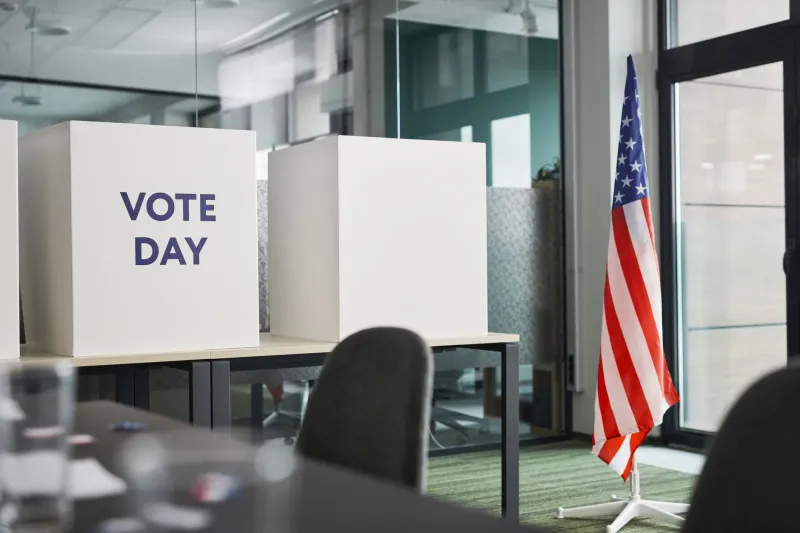
In a small town in rural Ohio during the mid-1980s, a combination of a tired poll worker, an inside joke, and a catastrophically under-resourced election verification system produced one of the strangest moments in American democratic history. A name that didn't belong to any living human being appeared on an official ballot. Voters chose that name. And for the better part of several months, a fictional person technically occupied a real seat on a local water district board.
How a Joke Became a Legal Candidate
The story begins, as many bureaucratic disasters do, with someone trying to be funny at exactly the wrong moment.
Local election offices in smaller American jurisdictions have historically operated with minimal staffing and even more minimal oversight. Candidate filings for low-profile positions — school boards, utility districts, township trustee seats — often passed through just one or two sets of hands before being certified. In many cases, nobody was cross-referencing names against voter rolls, Social Security records, or any centralized identity database. If a name arrived on the correct form with the correct filing fee, it went on the ballot.
In this particular Ohio county, a poll worker processing a filing for a water district board seat added a name as a placeholder during an internal review process — a common enough practice to flag incomplete paperwork. The name chosen was deliberately absurd, something along the lines of a character from a popular television comedy of the era. The intent was to mark the slot as incomplete and return to it. What happened instead was that the placeholder name survived every subsequent review, was printed on official ballots, and went before voters in a low-turnout November election.
Voter turnout for water district board races is, to put it generously, not robust. In many small counties, these elections draw a few hundred ballots at most. Candidates frequently run unopposed. Voters, when they bother to show up at all, often recognize none of the names and simply vote down the line or skip the race entirely. In this case, the fictional candidate ran against a real incumbent who had made himself unpopular over a recent rate dispute. The made-up name won.
The Moment Someone Actually Noticed
For a few weeks, nothing happened. The results were certified. The county clerk's office processed the paperwork. A congratulatory notice was apparently sent — to an address that did not exist.
It was only when the newly elected board member failed to appear for the swearing-in ceremony that anyone thought to look more carefully at who, exactly, had been elected. A county official attempting to locate the winner discovered that the name corresponded to no registered voter, no property owner, no taxpayer, and no human being with any traceable presence in the county, the state, or any adjacent state.
The legal scramble that followed was remarkable in its scope. Ohio election law at the time had robust provisions for handling deceased officeholders, resigned officeholders, and disqualified officeholders. It had virtually nothing on the books addressing what to do when an officeholder turned out to have never existed in the first place. Attorneys for the county spent weeks arguing over whether the seat should revert to the incumbent, trigger a special election, or simply be declared vacant. Meanwhile, the board continued meeting and conducting business — short one member, but technically, legally, fully constituted.
What the Whole Mess Actually Revealed
The Ohio case didn't make national headlines at the time. Local papers covered it with a mixture of embarrassment and dark humor. State election officials quietly updated their candidate verification procedures. A special election was eventually held to fill the seat properly, and life in the water district returned to its normally unremarkable rhythms.
But the story lingered in election law circles for years, and for good reason. It exposed something genuinely unsettling about how American local democracy functions at its edges. The systems that govern the most granular levels of civic life — the boards and commissions and districts that control water rates, zoning variances, and local infrastructure — often operate with the kind of trust-based, honor-system verification that made perfect sense in 1887 and makes considerably less sense in the modern era.
Nobody in the chain of custody for that ballot asked a simple question: does this person exist? Not because they were negligent, exactly, but because the system had never been designed to ask it. Candidate verification in low-profile races depended almost entirely on the assumption that anyone bothering to file was real. It was an assumption so deeply baked into the process that removing it required an actual fictional character winning an actual election before anyone thought to look.
A Strangely American Kind of Problem
There's something almost poetic about the fact that this happened in a water district race. Not a congressional seat, not a mayoral election — a water district board, the kind of civic infrastructure that most residents couldn't name if pressed. These are the positions that keep the lights on and the pipes flowing, and they are also, historically, the positions where American democratic oversight is thinnest.
The fictional officeholder never cast a vote, never attended a meeting, and never collected a salary. In that sense, the impact was minimal. But the fact that a made-up name could travel from a poll worker's desk to an official ballot to a certified election result without a single checkpoint catching the error is the kind of thing that makes you look at your local ballot a little differently next November.
Somebody probably should have checked. Nobody did. And for a few surreal months in rural Ohio, democracy — in its smallest, strangest form — technically belonged to someone who didn't exist.