
The Problem with Mountain Time
Imagine running a tourist destination where the sun sets at 4:30 PM during peak vacation season. That was Gatlinburg, Tennessee's nightmare in the 1940s — a picturesque mountain town losing thousands of tourism dollars because federal time zone boundaries made their evenings disappear too early.
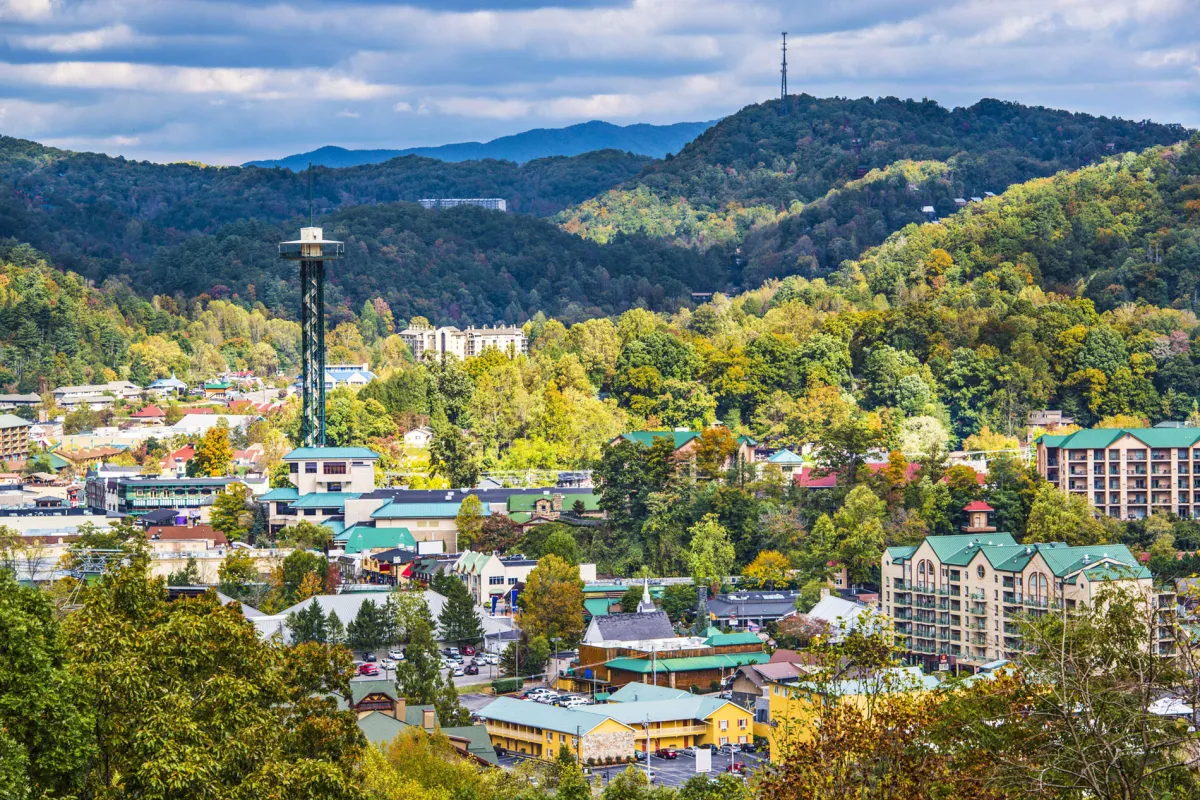 Photo: Gatlinburg, Tennessee, via downtowngatlinburg.com
Most people would accept this geographic reality and move on. Gatlinburg's city council decided to wage war against time itself.
The town sat uncomfortably in the Eastern Time Zone, but its position in the Smoky Mountains meant winter sunsets arrived brutally early. While Nashville enjoyed reasonable evening hours in Central Time, Gatlinburg's visitors found themselves eating dinner in darkness and heading back to their hotels before 6 PM.
 Photo: Smoky Mountains, via thumbs.dreamstime.com
"We're losing entire evenings of tourist revenue," Mayor Herbert Holt reportedly told the town council in 1949. "People don't vacation in the dark."
The Audacious Federal Petition
What happened next sounds like small-town political fiction, but it's documented in federal archives. Gatlinburg formally petitioned the Interstate Commerce Commission — the federal body that controlled time zone boundaries — to move their town from Eastern to Central Time.
Not their county. Not their region. Just their town.
The petition argued that Gatlinburg's economy depended on tourism, and the early sunsets were creating "economic hardship" for local businesses. They wanted federal permission to exist one hour behind the rest of East Tennessee, creating a temporal island in the Smoky Mountains.
Federal bureaucrats initially dismissed the request as impossible. Time zones followed state and county lines, not tourism board wishes. But Gatlinburg's lawyers had done their homework.
The Legal Loophole Nobody Expected
Turns out, federal time zone regulations contained a rarely-used provision allowing "geographic and economic hardship" exceptions for individual municipalities. The rule existed primarily for remote communities split by state borders, not mountain towns trying to extend happy hour.
Gatlinburg's legal team argued their case with surprising sophistication. They presented tourism revenue data, sunset tables, and economic impact studies showing how early darkness hurt local businesses. They even brought in expert testimony about "optimal tourism lighting conditions."
The Interstate Commerce Commission, perhaps exhausted by the town's persistence, agreed to hold formal hearings.
Three Years of Bureaucratic Warfare
What followed was one of the strangest federal proceedings in American history. For three years, lawyers argued about whether a Tennessee mountain town could legally exist in a different time zone than its neighbors.
Opponents included the state government, neighboring counties, and railroad companies who worried about scheduling chaos. Supporters included local business owners, tourism boards, and surprisingly, several federal economists who found Gatlinburg's economic arguments compelling.
The hearings produced thousands of pages of testimony about tourism patterns, sunset angles, and the relationship between daylight hours and vacation spending. Federal investigators actually traveled to Gatlinburg to measure shadow lengths and interview tourists about their evening plans.
The Impossible Victory
In 1952, the Interstate Commerce Commission issued its ruling: Gatlinburg could officially operate on Central Time while remaining geographically in Eastern Time zone territory.
The decision created what officials called a "temporal boundary exception" — essentially, a legal time warp. Visitors could drive from Knoxville to Gatlinburg and travel backward one hour without crossing any traditional time zone line.
Federal mapmakers struggled to document the anomaly. Official time zone maps started showing a tiny circle around Gatlinburg marked with asterisks and footnotes explaining the "special municipal time designation."
The GPS Nightmare That Never Ended
Seventy years later, Gatlinburg's time victory still confuses modern technology. GPS systems regularly miscalculate arrival times for the area. Smartphone clocks sometimes switch time zones multiple times during a single drive through the Smoky Mountains.
Cell phone towers in the region broadcast conflicting time signals. Digital highway signs display different times depending on which federal database they're connected to. Weather apps show Gatlinburg's sunrise and sunset times in both time zones because programmers can't agree which one is "correct."
Local businesses learned to specify "Gatlinburg time" or "Eastern time" when scheduling appointments. The town's official website includes a permanent notice explaining their "unique temporal status" to confused visitors.
The Precedent Nobody Wanted
Gatlinburg's victory opened a bureaucratic Pandora's box. Over the following decades, dozens of American towns attempted similar time zone petitions for economic reasons. A Nevada casino town wanted to match Las Vegas time. A Texas border city requested alignment with Mexican time zones. A Florida retirement community petitioned for "senior-friendly" daylight hours.
All were denied. Federal officials, apparently regretting their Gatlinburg decision, tightened time zone regulations to prevent future temporal chaos.
Today, Gatlinburg remains America's only town that successfully convinced the federal government to bend time itself for tourism dollars. The invisible line through the Smoky Mountains stands as proof that sometimes the most impossible bureaucratic victories come from small towns with big legal budgets and absolutely nothing to lose.
Visitors still cross that line without realizing it, gaining or losing an hour depending on their direction. Their phones might switch time zones. Their GPS might recalculate. But somewhere in federal archives, there's a file proving that time itself can be negotiated — if you fill out the right paperwork.