When Fiction Becomes Fact
Democracy runs on trust. Voters trust that candidates are who they claim to be, election officials trust that paperwork is accurate, and everyone trusts that the person sworn into office actually exists. In 1993, the small California town of Placerville learned what happens when that trust meets creative fiction—and the results were both hilarious and deeply unsettling.
The story begins with what should have been a routine local election. City council races in towns like Placerville rarely attract much attention. Turnout is low, candidates are usually well-known locals, and the biggest controversy might involve parking meters or dog leash laws. So when write-in votes started appearing for "Marcus Wellington," a candidate nobody had heard of, election workers assumed he was just another civic-minded resident stepping up to serve.
The Phantom Politician
Marcus Wellington's campaign was masterfully invisible. He filed no paperwork, attended no debates, and knocked on zero doors. His entire political platform existed solely in the imagination of a local college student who thought it would be funny to see if anyone was actually paying attention to municipal elections.
The student, whose real name remains confidential to this day, created Wellington as a social experiment. Armed with nothing but creativity and a basic understanding of write-in ballot procedures, they began a quiet whisper campaign among friends and classmates. Wellington's fictional biography was compelling: a retired businessman with military service and strong opinions about local infrastructure.
What the prankster didn't expect was for their joke candidate to actually win.
Democracy's Honor System
On election night, Marcus Wellington received 847 write-in votes—enough to secure a seat on Placerville's seven-member city council. The margin wasn't even close. Real candidates who had spent months campaigning and hundreds of dollars on yard signs found themselves defeated by someone who existed only as a name on ballots.
The victory exposed a glaring hole in California's election verification process. State law required candidates to file official paperwork and meet residency requirements—but only if they formally declared their candidacy. Write-in candidates operated in a gray area where verification happened after the election, not before.
Election officials dutifully recorded Wellington's victory and sent standard post-election paperwork to an address provided by helpful "campaign volunteers." When no response came back, they assumed the winner was simply busy with the transition.
The Swearing-In That Never Happened
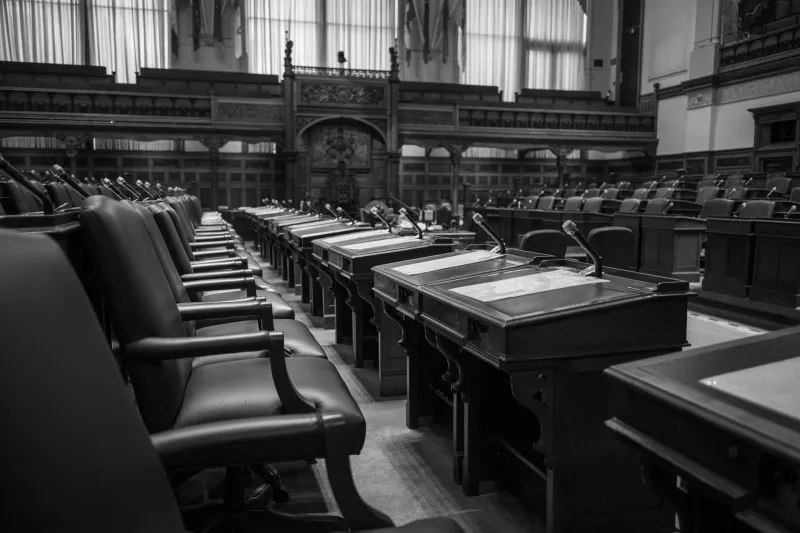
For three months, Marcus Wellington was officially a member of Placerville's city council. Meeting minutes listed him as absent, but that wasn't unusual for newly elected officials still arranging their schedules. His nameplate sat empty at council meetings, waiting for the mysterious councilman to take his seat.
The charade might have continued indefinitely if not for a routine background check required for a municipal insurance policy. When investigators tried to verify Wellington's identity for the paperwork, they discovered what should have been obvious from the beginning: Marcus Wellington had no social security number, no driver's license, and no verifiable existence beyond those 847 ballots.
The Unraveling
The investigation that followed was both thorough and embarrassing. County election officials had to admit they'd never actually confirmed that their newest councilman existed. The state attorney general's office launched a review of write-in verification procedures. Local newspapers had a field day with headlines about "phantom politicians" and "ghost governance."
The college student responsible for the prank eventually came forward, partly out of guilt and partly because they were genuinely worried about the legal implications of accidentally committing election fraud. Fortunately for them, prosecutors decided that the real problem wasn't the prank—it was the system that allowed it to succeed.
The Aftermath
Placerville quietly held a special election to fill Wellington's vacant seat, this time with enhanced verification procedures. The incident prompted California to tighten write-in candidate requirements, mandating identity verification before election results could be certified.
But the damage to civic confidence was already done. If a fictional character could win elected office simply by getting enough votes, what did that say about the democratic process? The answer, according to political scientists who studied the incident, was both troubling and oddly reassuring.
Lessons in Democratic Vigilance
The Marcus Wellington affair revealed that American democracy operates on a surprisingly thin layer of bureaucratic oversight. The system assumes good faith from participants and relies heavily on post-election verification rather than pre-election vetting. In most cases, this works fine—real candidates have real motivations to follow real procedures.
But the incident also demonstrated democracy's self-correcting mechanisms. When the error was discovered, officials didn't cover it up or pretend it hadn't happened. They investigated, implemented fixes, and moved forward with better procedures.
Today, Placerville's city council meetings proceed without phantom members, though locals still joke about the time they elected someone who didn't exist. The nameplate that once waited for Marcus Wellington is long gone, but the lesson remains: in democracy, trust is essential—but verification is even better.
The ghost councilman of Placerville serves as a reminder that even in the digital age, the basic mechanics of democracy can be surprisingly analog. Sometimes it takes a fictional politician to reveal very real problems with how we choose our leaders.