The Light That Time Forgot
Somewhere between the official decommissioning of Gull Point Lighthouse in 1987 and its actual silencing in 1998, the U.S. Coast Guard learned a valuable lesson about the difference between shutting something down on paper and shutting it down in reality. For eleven years, the automated beacon on Lake Huron continued its nightly vigil, flashing every ten seconds like clockwork, even though no one was supposed to be home.
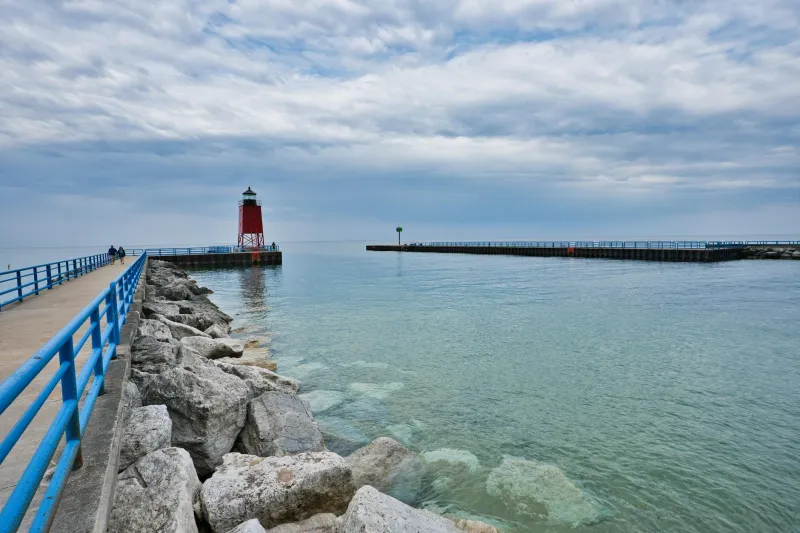
 Photo: Lake Huron, via ontheworldmap.com
The lighthouse had become a bureaucratic ghost—officially dead but very much alive, confusing ship captains and frustrating government officials who couldn't figure out how to make it stop.
A Beacon's Final Assignment
Gull Point Lighthouse had served faithfully since 1923, guiding vessels through the treacherous waters near Michigan's thumb. By the 1980s, modern GPS technology and improved navigation systems had made many traditional lighthouses obsolete. The Coast Guard began systematically decommissioning older facilities, and Gull Point was scheduled for closure as part of a broader modernization effort.
The shutdown procedure seemed straightforward enough. Remove the personnel, disconnect the power, file the paperwork, and update the maritime charts. What could go wrong?
Everything, as it turned out.
The Automated Revolution
Gull Point had been upgraded in 1979 with a state-of-the-art automated lighting system powered by solar panels and backup batteries. The technology was designed to operate independently for months without human intervention—a feature that made the lighthouse more reliable but also more difficult to shut down.
When the closure order came down in 1987, the departing lighthouse keeper followed standard protocol: he locked the facility, submitted his final reports, and handed over the keys. What he didn't do—because it wasn't in the official checklist—was disable the automated beacon system.
The solar panels continued converting sunlight into electricity. The batteries continued storing power. And every night, right on schedule, the lighthouse continued doing exactly what it had been programmed to do: flash a warning signal across the dark waters of Lake Huron.
Ships in the Night
The first sign of trouble came from confused ship captains who reported seeing a light that wasn't supposed to exist. According to their updated nautical charts, Gull Point Lighthouse was inactive, but their eyes told a different story. Night after night, the familiar beacon swept across the water, as reliable as ever.
Initially, the Coast Guard assumed these were simple reporting errors or outdated charts. But as reports accumulated, officials realized they had a problem. Ships were navigating based on a lighthouse that was officially closed, creating potential safety hazards and legal complications.
The Paper Trail to Nowhere
What followed was a comedy of bureaucratic confusion that would make Kafka proud. The original decommissioning order had been filed with the Coast Guard's Navigation Division, but the automated beacon fell under the jurisdiction of the Electronic Systems Division. Neither department had clear authority over the other's equipment.
The facility's physical keys were held by the General Services Administration, which managed government property. The solar power system had been installed by a private contractor whose maintenance agreement was handled by yet another agency. And the lighthouse itself sat on land that was technically owned by the state of Michigan but leased to the federal government under a 99-year agreement.
Everyone involved was certain that someone else was responsible for turning off the light.
The Phantom Facility
As months turned to years, Gull Point Lighthouse achieved a unique status in maritime history: it was simultaneously decommissioned and operational, absent from official charts but visible to anyone with eyes. Ship captains began referring to it as the "ghost light," logging its presence in their records while noting its official non-existence.
The lighthouse had become a bureaucratic Schrödinger's cat—both on and off at the same time, depending on whether you consulted the paperwork or looked out the window.
Meanwhile, the beacon continued its faithful service, powered by Michigan sunshine and bureaucratic inertia. The solar panels were surprisingly durable, requiring no maintenance to keep the system running. Nature had created a perpetual motion machine, and red tape had made it unstoppable.
The Mounting Frustration
By 1992, the Coast Guard was receiving regular complaints about the phantom lighthouse. Insurance companies wanted to know why their maritime charts didn't match reality. Environmental groups questioned whether the flashing light was disturbing wildlife. And taxpayers began asking why the government couldn't figure out how to turn off a simple lighthouse.
Multiple investigations were launched, each resulting in detailed reports that blamed other agencies for the ongoing confusion. The paperwork grew thick, but the lighthouse kept flashing.
One particularly frustrated Coast Guard administrator summed up the situation in a memo that became legendary within the agency: "We can launch satellites and guide missiles with pinpoint accuracy, but apparently we cannot turn off a light bulb in Michigan."
The Technical Challenge
Part of the problem was genuinely technical. The automated system had been designed to be tamper-proof and weather-resistant. Simply cutting the power wasn't enough—the backup batteries would keep the beacon running for weeks. And accessing the control systems required specialized knowledge that had left with the original installation contractor.
Several attempts were made to disable the light remotely, but the 1970s-era technology predated modern communication systems. The lighthouse was like an old analog radio in a digital world—still working perfectly, but impossible to reprogram.
The Final Solution
The end came in 1998, not through bureaucratic brilliance but through good old-fashioned persistence. A Coast Guard technician named Robert Chen took personal responsibility for the problem and spent weeks studying the lighthouse's technical specifications.
 Photo: Robert Chen, via www.wfmt.com
Chen discovered that the system could be disabled by physically disconnecting a specific relay inside the beacon housing—a procedure that required climbing the lighthouse tower and manually accessing the equipment. It was dangerous work that explained why previous teams had been reluctant to attempt it.
On a cold November morning, Chen made the climb and threw the switch. After eleven years of unauthorized service, Gull Point Lighthouse finally went dark.
Legacy of the Ghost Light
The story of Gull Point Lighthouse became a case study in government efficiency—or the lack thereof. It highlighted the challenges of managing complex systems across multiple agencies and the importance of clear shutdown procedures.
More importantly, it demonstrated the remarkable durability of well-designed technology. The lighthouse's automated system had operated flawlessly for over a decade without any human maintenance, powered entirely by renewable energy.
Today, Gull Point Lighthouse sits dark and silent, its beacon finally at rest. But for eleven years, it served as an accidental monument to both technological reliability and bureaucratic absurdity—a reminder that sometimes the hardest part of any job is knowing when to quit.
The lighthouse that wouldn't die had finally found peace, leaving behind a legacy of confusion, frustration, and one very persistent light that refused to go gentle into that good night.