The Route That Changed Everything
Earl Sutton had been delivering mail in rural Seneca County, Ohio, for thirty-seven years when he first noticed the pattern. One by one, the elderly Native American residents along his route were passing away, taking with them something irreplaceable: the last whispers of the Wyandot language.
It was 1973, and Sutton was nearing retirement from the postal service. Most mail carriers in his position would be counting down the days, looking forward to fishing trips and afternoon naps. Instead, Sutton found himself haunted by a realization that would transform him from a simple mailman into an accidental guardian of linguistic history.
The Last Speakers
The Wyandot people had been scattered across the Midwest for generations, with many eventually settling in Ohio. By the 1970s, their ancestral language was hanging by a thread. Fewer than a dozen elderly speakers remained, most of them living in isolation on small farms and in modest homes along Sutton's mail route.
Sutton had gotten to know these customers over the decades. There was Margaret Snake, who always offered him coffee and spoke in what he initially assumed was broken English. Frank Deer, who muttered to himself in strange, musical syllables while tending his garden. And old Joseph Standing Bear, who would sometimes answer his door speaking words that sounded like nothing Sutton had ever heard.
It wasn't until he attended Margaret Snake's funeral that Sutton realized what he'd been hearing all those years. The handful of mourners spoke briefly in their native tongue during the service, and afterward, one of them mentioned how few people remained who could still do so.
An Ordinary Man's Extraordinary Mission
Sutton had no background in linguistics, anthropology, or cultural preservation. His formal education ended with high school, and his expertise was limited to knowing every back road in three counties. But he had something more valuable: daily access to the last living speakers of a dying language.
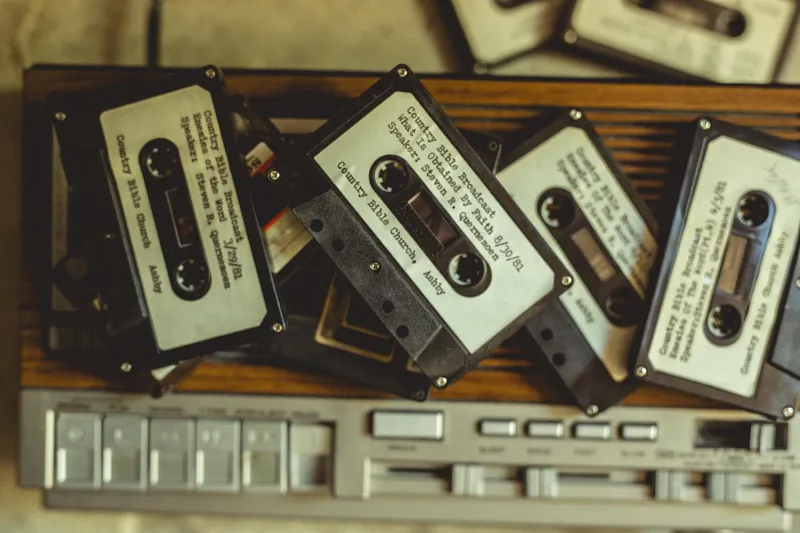
Without consulting any academic institutions or seeking official approval, Sutton bought a basic cassette recorder from a local electronics store and began what would become a seven-year mission. During his lunch breaks and after work, he would visit the elderly Wyandot speakers, asking if they would mind talking into his machine.
The Shoebox Archive
Sutton's methodology was refreshingly simple. He would sit in living rooms and on front porches, pressing record and asking his subjects to share whatever came to mind. Sometimes they told traditional stories. Other times they simply described their daily routines or complained about the weather—all in fluent Wyandot.
He had no formal interview structure, no linguistic training, and no grant funding. What he had was patience, genuine curiosity, and an intuitive understanding that time was running out. As each speaker passed away, Sutton's sense of urgency grew.
The recordings accumulated in shoeboxes in his basement, carefully labeled with dates and names in Sutton's careful handwriting. By 1980, when the last known fluent speaker died, Sutton had collected over 200 hours of audio—representing virtually the entire surviving oral tradition of the Wyandot language.
The Academic Discovery
For years, Sutton's collection remained in his basement, known only to his family and a few local friends. He occasionally mentioned it to people, but most assumed it was just an old mailman's quirky hobby. The academic world had no idea that the most comprehensive record of spoken Wyandot existed in a retired postal worker's shoebox archive.
The discovery happened almost by accident in 1987. Dr. Sarah Mitchell, a linguistics professor at Ohio State University, was researching Native American languages of the Great Lakes region when a colleague mentioned hearing about a postal worker who had recorded some elderly speakers. Mitchell tracked down Sutton, expecting to find perhaps a few hours of amateur recordings.
What she found instead was a linguistic goldmine.
Treasure in the Basement
Mitchell later described her first visit to Sutton's basement as one of the most significant moments of her career. The shoeboxes contained not just random conversations, but a complete cross-section of spoken Wyandot: ceremonial songs, everyday conversations, traditional stories, and even arguments between family members—all captured in natural, unguarded moments.
The quality wasn't professional, but it was authentic in ways that formal academic recordings rarely achieved. Sutton's subjects had been comfortable with him, speaking naturally rather than performing for researchers. The result was an unprecedented window into how Wyandot actually sounded when spoken by its last native speakers.
From Basement to University
Sutton donated his entire collection to Ohio State University, where Mitchell and her team spent years digitizing and cataloging the recordings. The archive became the foundation for the most comprehensive study of Wyandot language ever undertaken, contributing to dictionaries, grammar guides, and cultural preservation efforts.
The recordings revealed linguistic features that had never been documented, including regional dialects and generational changes in pronunciation. They captured not just words and grammar, but the rhythm, emotion, and cultural context that give language its life.
The Ripple Effect
Sutton's work inspired similar efforts across the country. His story became a case study in community-based language preservation, demonstrating that ordinary people could make extraordinary contributions to cultural heritage.
More importantly, his recordings enabled modern Wyandot descendants to reconnect with their linguistic roots. Language revitalization programs now use Sutton's tapes to teach pronunciation and intonation to new learners, bringing the sounds of their ancestors back to life.
The Unlikely Archivist
Earl Sutton never considered himself a scholar or preservationist. He was simply a mailman who noticed something important slipping away and decided to do something about it. His lack of formal training, rather than being a limitation, may have been his greatest asset—it allowed him to approach his subjects as friends and neighbors rather than research subjects.
Sutton passed away in 2003, but his legacy lives on in university archives and in the voices of young Wyandot people learning their ancestral language. The man who spent decades delivering mail to rural Ohio had, without realizing it, delivered something far more precious: the gift of linguistic survival.
In an age of sophisticated recording equipment and professional preservation efforts, the story of Earl Sutton reminds us that sometimes the most important work is done by ordinary people who simply notice what others miss—and care enough to act.