The Melted Candy Bar That Changed How America Cooks Forever
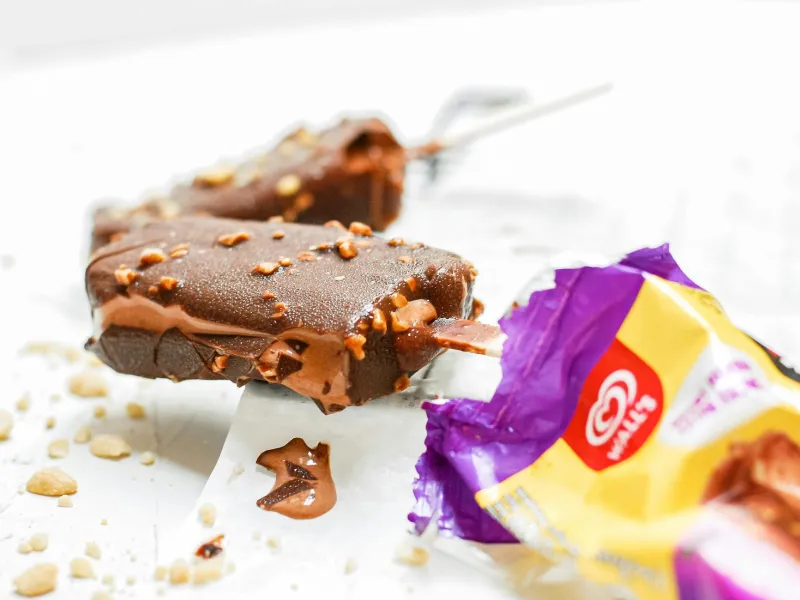
The Sweet Accident That Started It All
Picture this: You're working late at the office, focused on perfecting military radar technology, when you reach into your pocket for a quick snack. Instead of finding a solid chocolate bar, your fingers meet a gooey, melted mess. Most people would curse their luck, toss the candy, and move on with their day.
Percy Spencer wasn't most people.
On that fateful day in 1945, the self-taught engineer at Raytheon was standing near an active magnetron—a high-powered vacuum tube that generates microwaves for radar systems. When he discovered his Mr. Goodbar had turned into chocolate soup, Spencer didn't file a complaint with facilities management. Instead, he did something that would accidentally change the way Americans eat forever: he got curious.
From Radar Waves to Kitchen Revolution
Spencer had been working on improving radar technology for the U.S. Navy when his confectionery mishap occurred. The magnetron he was testing was designed to detect enemy aircraft, not cook food. But Spencer, who had dropped out of school at age 12 and taught himself engineering through pure determination, recognized that something extraordinary had just happened.
The next day, Spencer returned to work with a bag of popcorn kernels. He placed them near the magnetron and watched in amazement as they began popping without any traditional heat source. The electromagnetic waves were somehow agitating the water molecules inside the food, creating heat from the inside out.
But Spencer wasn't done experimenting. His third test subject? A raw egg.
When he placed the egg near the magnetron, it began cooking so rapidly that it exploded, splattering hot yolk all over a skeptical colleague who had been watching the bizarre demonstration. That messy moment convinced Spencer he was onto something revolutionary.
The Birth of a Kitchen Giant
Spencer's employer, Raytheon, initially had no idea what to do with this accidental discovery. The first commercial microwave oven, called the "Radarange," was introduced in 1947 and stood over six feet tall, weighed 750 pounds, and cost $5,000—equivalent to about $60,000 today.
Restaurants and ocean liners were the primary customers for these massive machines. The idea that every American household would eventually have a countertop version seemed absurd. After all, who needs to cook food with radar waves when you have a perfectly good stovetop?
The Long Road to Your Kitchen Counter
It took nearly three decades for microwave ovens to become affordable and compact enough for home use. The first countertop model appeared in 1967, priced at $495—still expensive, but no longer requiring a forklift to install.
By the 1970s, clever marketing campaigns began positioning microwaves as time-saving devices for busy families. TV dinners, invented in 1953, suddenly made perfect sense. The microwave and frozen food industries grew together, creating an entirely new way of thinking about meal preparation.
The Science Behind the Sweet Discovery
What Spencer had stumbled upon was the principle of dielectric heating. Microwaves operate at a frequency of 2.45 gigahertz, which happens to be particularly effective at exciting water molecules. When these molecules vibrate rapidly, they generate heat through friction.
This discovery was purely accidental—Spencer wasn't trying to cook anything. He was simply working on military technology when physics decided to reveal one of its kitchen secrets through a melted candy bar.
From Military Lab to Cultural Icon
Today, more than 90% of American households own a microwave oven. The appliance that began as a massive military radar component now reheats countless cups of coffee, defrosts frozen dinners, and provides college students with their primary cooking method.
Spencer, who held 300 patents by the end of his career, probably never imagined that his curiosity about a melted chocolate bar would fundamentally change how an entire nation approaches food preparation. He was simply an engineer who noticed something odd and decided to investigate further instead of cleaning chocolate off his fingers and forgetting about it.
The Oddly Perfect Timing
The timing of Spencer's discovery was oddly perfect. Post-war America was embracing convenience and technology. Women were entering the workforce in greater numbers, creating demand for time-saving kitchen appliances. The frozen food industry was expanding, and the concept of "fast food" was beginning to take hold.
Spencer's melted candy bar arrived at precisely the right moment in American history to transform from a laboratory curiosity into a cultural phenomenon.
So the next time you zap leftover pizza or defrost tomorrow's dinner, remember Percy Spencer and his chocolate mishap. Sometimes the most revolutionary discoveries happen when we're just trying to grab a quick snack—and have the curiosity to ask "why" instead of reaching for a napkin.