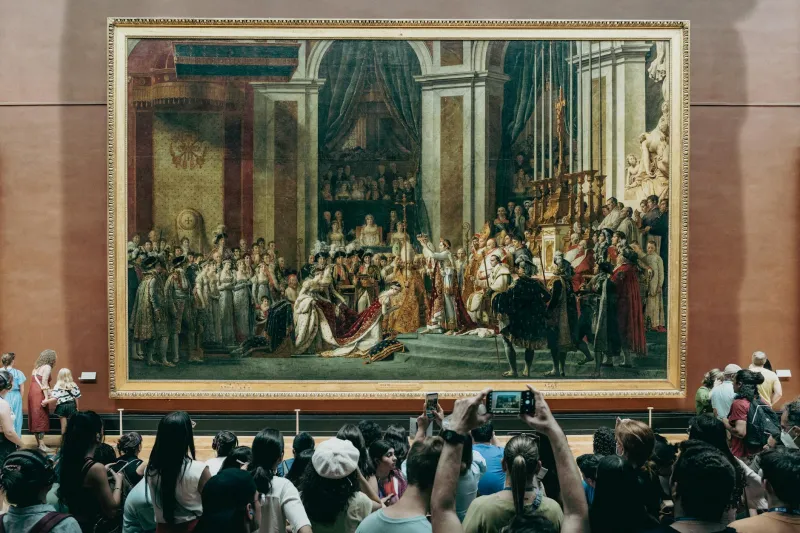
Some of the world's most valuable art hangs in prestigious museums, carefully climate-controlled and protected by state-of-the-art security systems. Others, apparently, hang in high school cafeterias where teenagers spill soda and throw french fries beneath them for decades. This is the story of how a stolen masterpiece worth more than most people's houses spent 30 years hiding in plain sight, watching over lunch periods at an ordinary American high school.
The Heist That Nobody Noticed
The painting's journey into educational obscurity began in 1969 at the University of Arizona Museum of Art in Tucson. "Woman-Ochre," a vibrant 1955 work by Dutch-American master Willem de Kooning, hung peacefully in the museum's collection, valued at what would be several hundred thousand dollars in today's money.
 Photo: Willem de Kooning, via imgcdn.stablediffusionweb.com
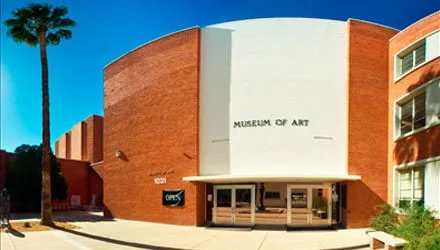 Photo: University of Arizona Museum of Art, via printclubofnewyork.org
On Thanksgiving Day, when the museum was closed and security was minimal, two visitors from the previous day returned with a purpose that had nothing to do with art appreciation. They had cased the joint during regular hours, noting the painting's location and the museum's security weaknesses.
The theft itself was almost comically simple. The thieves cut the painting from its frame with a razor blade and walked out with it rolled under their arm. No alarms sounded, no dramatic chase scenes ensued — just two people stealing a priceless work of art like they were shoplifting a magazine.
Vanishing Into America
For the next three decades, "Woman-Ochre" simply disappeared. The FBI investigated, insurance companies paid out claims, and art recovery specialists added it to their databases of missing masterworks. The painting had effectively vanished into the vast expanse of American suburbia, where it would remain hidden for longer than most people's entire careers.
Meanwhile, the art world moved on. De Kooning's reputation continued to grow, and similar works began selling for millions of dollars at auction. "Woman-Ochre" became one of those legendary lost paintings that art historians write about in hushed tones, wondering if it had been destroyed, sold to a private collector, or was gathering dust in someone's attic.
The truth was simultaneously more mundane and more extraordinary than anyone imagined.
The High School Years
Sometime in the 1980s, "Woman-Ochre" found its way to the walls of a high school in rural New Mexico, where it was hung in the cafeteria as part of the school's art collection. How exactly it arrived there remains a mystery — school records from the period are incomplete, and many of the staff members from that era have since retired or passed away.
What's certain is that for the better part of three decades, hundreds of students ate their lunches beneath a stolen de Kooning worth more than the annual budget of their entire school district. They complained about cafeteria food while sitting under a masterpiece. They threw paper airplanes and gossiped about weekend plans in the presence of one of America's most wanted artworks.
The painting hung there through multiple generations of students, countless lunch periods, food fights, pep rallies, and parent-teacher conferences. Teachers used the cafeteria for meetings, custodians mopped around it, and administrators walked past it daily without giving it a second thought.
The Art Teacher Who Almost Knew
Over the years, a few people noticed that the cafeteria painting looked suspiciously sophisticated for a high school art collection. One art teacher mentioned to colleagues that the brushwork seemed remarkably similar to de Kooning's style, but the suggestion that their school might be housing a stolen masterpiece was dismissed as wishful thinking.
After all, what were the odds? Stolen masterpieces belonged in the plots of heist movies, not in the everyday reality of public education. The painting was probably a reproduction, or perhaps the work of a talented local artist who happened to paint in a similar style.
The art teacher's suspicions were filed away under "interesting but improbable," and lunch continued to be served beneath the mysterious painting.
The Estate Sale Discovery
The truth finally emerged in 2017, when an elderly couple in rural New Mexico passed away and their belongings were put up for estate sale. Among the items was a painting that the couple's nephew recognized as potentially valuable. He took photos and sent them to auction houses for evaluation.
Expert analysis quickly identified the work as "Woman-Ochre," the de Kooning masterpiece that had been missing for nearly half a century. The couple had apparently acquired it sometime in the 1980s, though how they came to possess a stolen artwork worth hundreds of thousands of dollars remains unclear.
What investigators were able to piece together was that the couple had loaned the painting to the local high school, where it had hung for decades as part of an informal art program. They had apparently donated several works to the school over the years, treating the de Kooning as just another piece in their collection.
The Return Home
After 32 years in exile, "Woman-Ochre" was finally returned to the University of Arizona Museum of Art in 2017. The painting had survived its unconventional housing remarkably well — cafeteria humidity and the occasional flying food notwithstanding.
Museum conservators found that the painting needed some restoration work, but nothing that couldn't be repaired. The years of watching over high school lunch periods had left their mark, but the masterpiece was fundamentally intact.
The high school, meanwhile, suddenly found itself with a much less valuable art collection and a story that would be told for generations. Students who had eaten lunch beneath the painting were amazed to learn they had been in the presence of a masterpiece worth more than their parents' houses.
Lessons from the Lunch Room
The story of "Woman-Ochre" reveals something profound about how we perceive value and authenticity. For 30 years, a priceless work of art hung in a high school cafeteria, and its value was essentially meaningless because nobody recognized what they were looking at.
It also highlights the strange paths that stolen art can take. While investigators searched galleries, auction houses, and private collections, the missing masterpiece was hiding in the most public place imaginable — a school cafeteria where hundreds of people saw it every day.
The Mystery That Remains
Despite the painting's recovery, many questions remain unanswered. How did the elderly couple acquire a stolen artwork? Did they know its true value and history? Why did they choose to loan it to a high school rather than sell it or donate it to a major museum?
The FBI has closed its investigation, and the couple took their secrets to the grave. "Woman-Ochre" is back where it belongs, but its three-decade journey through America's educational system remains one of the art world's most peculiar mysteries.
In the end, the painting's story serves as a reminder that extraordinary things can hide in the most ordinary places, and sometimes the most valuable treasures are the ones we walk past every day without noticing.