The Moldy Mess That Revolutionized Medicine — Thanks to One Very Messy Scientist
The Sloppiest Lab in London
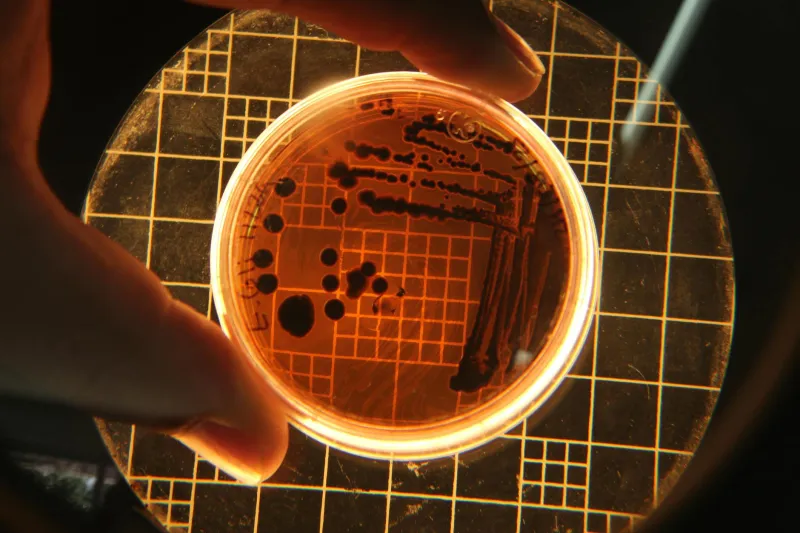
If you walked into Alexander Fleming's laboratory at St. Mary's Hospital in London during the summer of 1928, you'd probably assume the janitor had gone on strike. Petri dishes piled high, cultures growing wild, and experiments abandoned mid-stream — Fleming's workspace looked more like a science fair gone wrong than a serious research facility.
But sometimes, the most groundbreaking discoveries come from the most unexpected places. And in Fleming's case, that place was a stack of dirty dishes he'd forgotten to clean before leaving for vacation.
A Vacation That Changed Everything
In early August 1928, Fleming decided he needed a break. He'd been working on staphylococcus bacteria — the nasty stuff that causes everything from skin infections to pneumonia — and frankly, he was getting nowhere. So he did what any exhausted scientist would do: he left his experiments sitting on the lab bench and headed off to Scotland for a well-deserved holiday.
What Fleming didn't do was clean up his workspace. Dozens of bacterial cultures sat exposed to the London air, slowly growing and changing in ways he never intended. For most scientists, this would be a career-ending mistake. For Fleming, it was about to become the luckiest accident in medical history.
The Discovery That Almost Wasn't
When Fleming returned to his lab in September, he faced the dreaded task of cleaning up his mess. One by one, he examined the petri dishes, most of which were contaminated beyond salvation. He was about to toss them all into a disinfectant solution when something caught his eye.
One dish looked different. A blue-green mold had grown across part of the bacterial culture, and around that mold, something incredible had happened: the deadly staphylococcus bacteria had simply... disappeared. Not died — vanished entirely, leaving clear zones where the mold had somehow prevented their growth.
Most people would have shrugged and thrown it away. Fleming almost did. But something about that empty space nagged at him.
The Mold That Ate Bacteria
Fleming's curiosity got the better of him. He kept the contaminated dish and began studying the mysterious mold more closely. What he found defied everything scientists thought they knew about bacterial growth. The mold — later identified as Penicillium notatum — was producing some kind of substance that could kill bacteria from a distance.
He named this bacteria-killing substance "penicillin" after the mold that produced it. But here's where the story gets even stranger: Fleming had no idea what he'd actually discovered. He knew penicillin could kill bacteria in a lab dish, but he had no clue how to turn it into medicine that could save human lives.
The Breakthrough That Nearly Broke Through Too Late
For over a decade, penicillin remained little more than a laboratory curiosity. Fleming published his findings in 1929, but the medical world largely ignored them. The substance was difficult to extract, unstable, and seemingly impossible to mass-produce. Fleming himself moved on to other projects, never realizing he'd stumbled upon humanity's greatest weapon against bacterial infection.
It wasn't until 1940 — twelve years later — that a team at Oxford University, led by Howard Florey and Ernst Boris Chain, figured out how to purify and mass-produce penicillin. Their breakthrough came just in time for World War II, when battlefield infections were killing as many soldiers as enemy bullets.
The Numbers Don't Lie
The impact of Fleming's accidental discovery is almost impossible to comprehend. Before penicillin, a simple scratch could become a death sentence. Pneumonia killed one in three people who contracted it. Childbirth fever claimed countless new mothers. Tuberculosis was essentially a slow-motion death warrant.
Today, penicillin and related antibiotics save an estimated 200 million lives annually. That's roughly 75 billion people who have lived because one Scottish scientist forgot to wash his dishes before vacation.
The Twist of Fate That Almost Wasn't
But here's the most mind-blowing part of this story: Fleming's discovery required a perfect storm of accidents. The specific strain of mold that contaminated his dish was incredibly rare — it had likely blown in through an open window from a mycology lab one floor below. The temperature in London that August was unusually cool, creating ideal conditions for both the mold and bacteria to grow at just the right rates.
If Fleming had been a tidier scientist, if London had been warmer, if that window had been closed, if he'd cleaned his lab before vacation — any one of these small changes would have prevented the discovery entirely. We'd be living in a world where a paper cut could still kill you.
The Lesson in the Mess
Fleming's story reminds us that sometimes the biggest breakthroughs come from the smallest mistakes. His "sloppy" lab habits, which his colleagues often criticized, created the exact conditions necessary for one of medicine's greatest discoveries.
As Fleming himself later said, "I certainly didn't plan to revolutionize all medicine by discovering the world's first antibiotic. But I guess that sometimes it pays to keep an untidy laboratory."
So the next time someone tells you to clean up your workspace, just remember: somewhere in that mess might be the discovery that changes the world. Though probably, it's just a mess. But you never know.