When a Mountain Town Crowned Itself King: The Road Rage That Almost Broke America
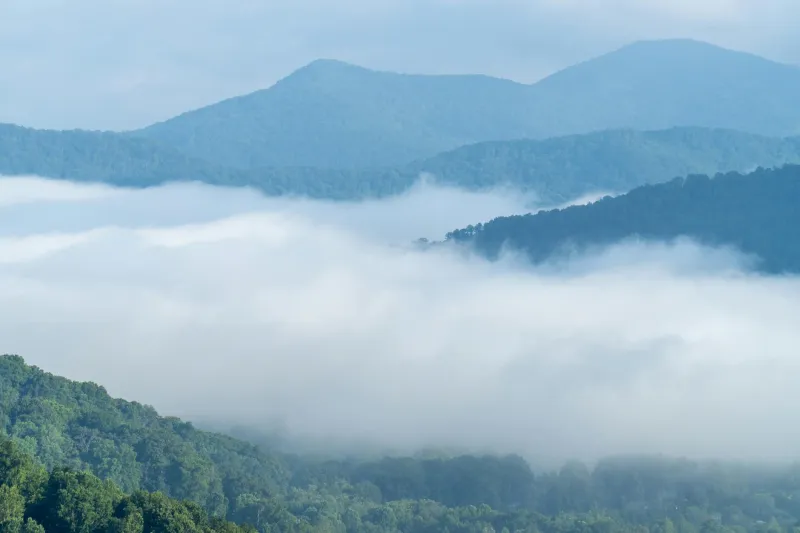
Picture this: You're driving through the Blue Ridge Mountains of North Carolina when you see a handmade sign that reads "Welcome to the Free Republic of Winston." You might think it's a quirky tourist attraction, but in 1982, the 847 residents of this tiny mountain community were dead serious about their independence.
The Pothole That Started a Revolution
The whole mess began with what should have been a routine infrastructure project. The North Carolina Department of Transportation announced plans to repave and widen the winding mountain road that served as Winston's only connection to the outside world. Sounds reasonable, right? The state would handle the costs, improve safety, and everyone would benefit from smoother travel.
But there was a catch that nobody saw coming.
The proposed road improvements would require demolishing twelve historic homes along the route, including the 1890s general store that had served as the town's unofficial community center for nearly a century. Even worse, the new road design would bypass Winston's tiny downtown area entirely, essentially turning the town into a dead end.
"They wanted to erase us from the map," recalled Martha Hendricks, who served as Winston's unofficial mayor during the crisis. "We'd been here since before North Carolina was even a proper state, and some bureaucrat in Raleigh decided our town wasn't worth preserving."
From Petition to Proclamation
The townspeople tried everything through official channels first. They filed petitions, attended county meetings, and even organized a letter-writing campaign to the governor. For eight months, they fought the road project through proper legal channels, only to be told repeatedly that the decision was final and non-negotiable.
That's when things got weird.
On March 15, 1982, the entire town gathered in the community center for what they called an "emergency constitutional convention." By a vote of 847 to 0 (with three abstentions), they officially declared Winston's withdrawal from both North Carolina and the United States of America.
The proclamation, handwritten on letterhead from the local hardware store, stated: "We, the sovereign people of Winston, having been abandoned by our state and federal governments, do hereby establish ourselves as the Free Republic of Winston, with all rights and privileges thereof."
Building a Nation from Scratch
What happened next reads like a comedy sketch, except it was completely real and legally documented in state archives.
The newly independent republic immediately faced the practical challenges of nationhood. They needed a government, laws, currency, and – most importantly – a way to handle the federal mail service that was still delivering to their zip code.
Hendricks was elected president in a ceremony held at the general store. Her first executive order established Winston Standard Time, which ran exactly seven minutes ahead of Eastern Standard Time "to ensure our independence from federal timekeeping tyranny." They printed their own currency – colorful bills featuring the town's mascot, a black bear named Roosevelt – and began accepting them at local businesses alongside U.S. dollars.
The republic even established diplomatic relations with a similarly frustrated community in Montana that had declared independence over a fishing rights dispute. The two "nations" exchanged ambassadors and signed a mutual defense treaty that was notarized at the Winston post office.
When Reality Crashed the Party
For six months, the Free Republic of Winston operated as a genuine breakaway state. They collected their own taxes (voluntary contributions, really), issued marriage licenses, and maintained their own volunteer fire department. The state of North Carolina initially treated the whole thing as an amusing publicity stunt.
That changed when Winston stopped forwarding state tax collections to Raleigh.
Suddenly, lawyers from the state attorney general's office were driving up winding mountain roads to figure out how to handle a secession crisis that nobody had ever planned for. The legal questions were genuinely complex: Could a municipality withdraw from a state? What happened to federal services? Were Winston residents still U.S. citizens?
The Compromise That Saved Face
The standoff finally ended through an unlikely mediator: a state highway engineer named Bob Patterson who had grown up in Winston before moving to Raleigh. Patterson convinced his superiors to modify the road project, preserving the historic general store and routing the new highway to include – rather than bypass – the town center.
In September 1982, President Hendricks signed the "Treaty of Winston," officially rejoining North Carolina and the United States. The ceremony included a barbecue dinner, a bluegrass band, and formal recognition of Winston Standard Time as a local tradition (though not legally binding).
The Legacy of America's Shortest-Lived Republic
The Free Republic of Winston lasted exactly 183 days, making it one of the briefest secession attempts in American history. But the incident had lasting effects that nobody anticipated.
The case established important legal precedents about municipal rights and state infrastructure projects. More significantly, it inspired similar communities across America to push back against unwanted development projects, though few went as far as declaring independence.
Today, Winston looks much like any other small mountain town, except for one detail: the general store still displays the original proclamation of independence, and every March 15th, they celebrate "Republic Day" with a festival that draws tourists from across the region.
Sometimes the most American thing you can do is refuse to be American – at least until someone offers you a better deal.