The Letter That Broke the Silence
For decades, the U.S. government maintained perfect plausible deniability about Area 51. Officials never confirmed or denied its existence, deflecting questions with standard responses about classified facilities and national security. Then, in 1992, a single misdirected piece of mail began unraveling one of America's most carefully guarded secrets.
The document was routine government paperwork—a toxic waste disposal notification that should have gone to a standard military administrative office. Instead, it landed in Post Office Box 92, Rachel, Nevada, a tiny desert town that barely qualified as a dot on the map. The postal error seemed insignificant, but it would prove to be the thread that exposed the official existence of America's most famous secret base.
 Photo: Rachel, Nevada, via travelnevada.com
A Reporter's Curiosity
George Knapp, an investigative reporter for Las Vegas television station KLAS, had been following UFO stories and rumors about mysterious government activities in the Nevada desert. When word reached him about the misdirected mail, his journalistic instincts kicked in. Why would the government be sending toxic waste notifications to a remote post office box in the middle of nowhere?
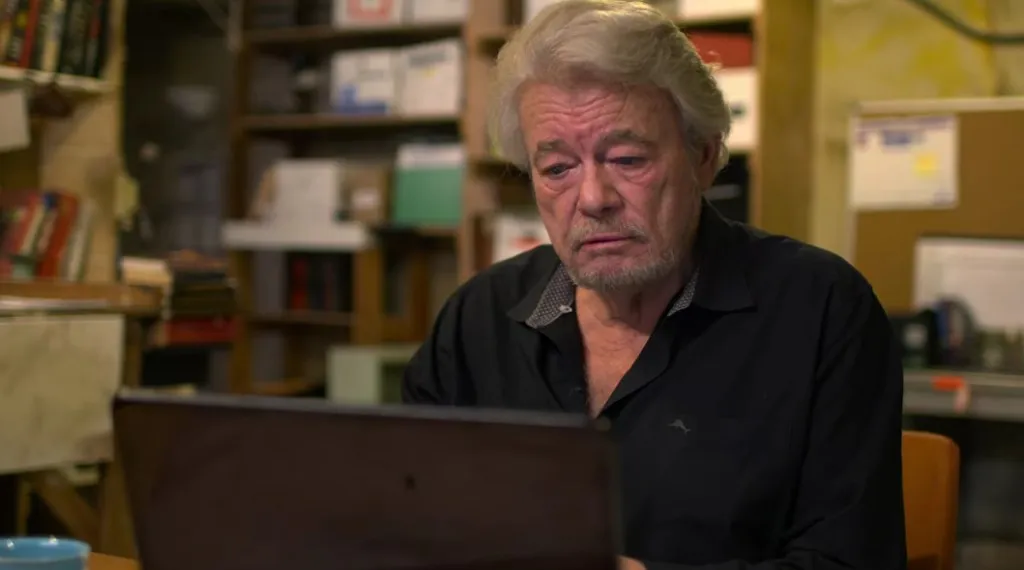 Photo: George Knapp, via thecinemaholic.com
Knapp began pulling public records, cross-referencing tax documents, and studying satellite imagery. What he found was a paper trail that the government had never intended to create. The documents revealed that a massive, highly classified facility existed at coordinates that matched exactly with the location UFO enthusiasts had long called "Area 51."
Following the Bureaucratic Breadcrumbs
The beauty of Knapp's investigation was its reliance on completely legal, publicly available information. No classified documents were leaked, no whistleblowers came forward, and no laws were broken. Instead, the reporter used the government's own bureaucratic processes against it.
Property tax records showed the federal government owned vast tracts of restricted land in the area. Environmental impact statements mentioned activities at coordinates that corresponded to the mysterious base. Even more damning, budget documents revealed massive expenditures for construction and maintenance at a facility that officially didn't exist.
Knapp's breakthrough came when he discovered that the Environmental Protection Agency had been quietly monitoring air quality and waste disposal at the site for years. The agency's own reports, filed as required by federal law, contained detailed references to operations at what they called "Area 51"—the first time the name appeared in official government documentation.
The Government's Impossible Position
As Knapp's reporting gained national attention, the government found itself in an unprecedented bind. For decades, the standard response to questions about Area 51 had been neither confirmation nor denial. But the reporter's investigation had assembled such a comprehensive case using the government's own documents that continued denial was becoming impossible.
The situation grew more complicated when environmental groups seized on Knapp's findings to demand transparency about toxic waste disposal at the site. Workers who had been employed at the facility began coming forward with health complaints, claiming exposure to dangerous chemicals. Their lawsuits required the government to either acknowledge the facility's existence or face court orders to produce documentation about a base that supposedly didn't exist.
The Accidental Confession
The breakthrough came in 1995 when President Bill Clinton signed Presidential Determination 95-45, exempting Area 51 from environmental disclosure laws. The order was intended to protect classified operations, but it had an unintended consequence: by specifically naming "the Air Force's operating location near Groom Lake, Nevada"—the official designation for Area 51—the government had finally acknowledged what it had spent decades denying.
The presidential order was the first official confirmation that the facility existed. While it didn't reveal what happened there, it ended the government's ability to claim ignorance about the base's existence. After nearly half a century of official silence, Area 51 had been acknowledged through a legal technicality designed to protect it.
The Power of Public Records
Knapp's investigation demonstrated how even the most classified government operations leave paper trails in an open democracy. Environmental regulations, tax assessments, budget allocations, and safety inspections all create documents that must be filed with various agencies. These seemingly mundane bureaucratic requirements can expose secrets that were never meant to see daylight.
The Area 51 revelation also highlighted the challenge of maintaining secrecy in the modern information age. Satellite imagery, available to anyone with internet access, made it impossible to hide large-scale construction projects. Cross-referencing databases that were never meant to be connected could reveal patterns that exposed classified operations.
Unintended Consequences
The government's acknowledgment of Area 51 didn't end conspiracy theories—it fueled them. If officials had lied about the base's existence for decades, what else were they hiding? The revelation that a secret facility really did exist in the Nevada desert gave credibility to claims about UFO research and alien technology that the government continues to deny.
Paradoxically, confirming Area 51's existence may have made it easier to keep its actual activities secret. By acknowledging the base while providing no details about its operations, the government could point to official transparency while maintaining operational security.
The Modern Legacy
Today, Area 51's existence is common knowledge, referenced in movies, television shows, and tourist brochures for Nevada's "Extraterrestrial Highway." The base remains highly classified, but its location and basic purpose—testing experimental aircraft—are no longer state secrets.
The story serves as a reminder that in a democracy, even the most carefully guarded secrets are vulnerable to the very transparency laws designed to ensure government accountability. Sometimes the most mundane bureaucratic processes—filing environmental reports, paying property taxes, disposing of waste—create the cracks through which classified information inevitably leaks.
The Lesson of the Misdirected Mail
George Knapp's investigation began with a simple postal error and ended with the government acknowledging one of its most famous secret facilities. The case demonstrated that persistent journalism, combined with America's freedom of information laws, could penetrate even the most carefully constructed walls of secrecy.
The misdirected mail to Post Office Box 92 in Rachel, Nevada, proved that sometimes the biggest government secrets are exposed not by dramatic leaks or whistleblower revelations, but by something as ordinary as a letter sent to the wrong address. In the end, Area 51's existence was confirmed not by alien autopsy videos or deathbed confessions, but by the simple fact that even secret bases have to follow environmental regulations and file the proper paperwork.