The Pothole That Nearly Created America's 51st State
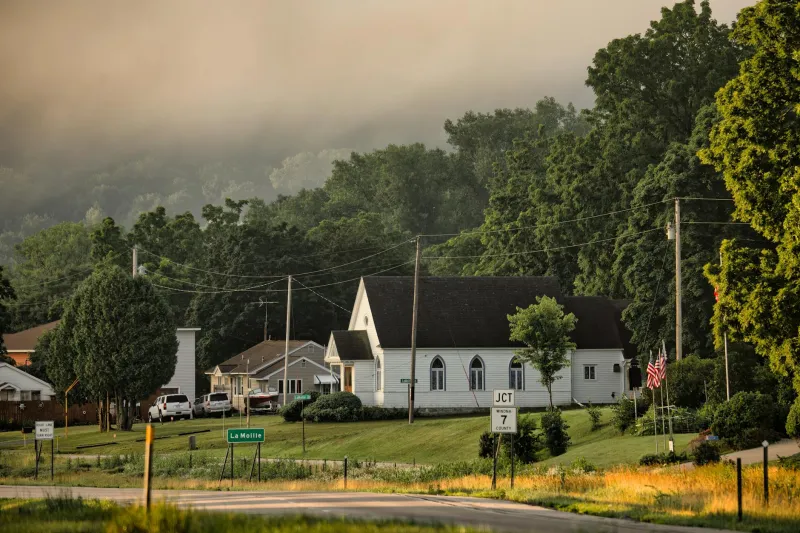
The Road to Nowhere
In 1977, the residents of Kinney, Minnesota had a problem. Not a big problem by most standards — just a massive pothole that had been slowly swallowing cars on their main road for the better part of three years. But when your entire community consists of fewer than 100 people living in what's essentially a wide spot in the road, one giant pothole can feel like the end of the world.
The good folks of Kinney had done everything right. They'd filed complaints with the county. They'd written letters to the state. They'd made phone calls, sent telegrams, and probably considered smoke signals. The response from officialdom? Radio silence.
That's when someone — and nobody quite remembers who — suggested they take matters into their own hands. Not by fixing the pothole themselves, mind you. By declaring independence from the United States of America.
A Declaration Born of Desperation
What happened next sounds like something out of a Coen Brothers movie. The residents of Kinney gathered at their local bar (because where else do you plan a revolution in rural Minnesota?) and drafted what they called the "Kinney Declaration of Independence."
The document was equal parts comedy and genuine frustration. It listed their grievances against the state of Minnesota — chief among them the "tyrannical neglect of basic road maintenance" — and formally declared the establishment of the "Republic of Kinney." They even drew up a flag featuring a pothole and appointed a mayor, a treasurer, and a minister of foreign affairs.
The whole thing was meant to be a publicity stunt, a way to embarrass state officials into finally fixing their road. They figured they'd send the declaration to a few newspapers, maybe get a chuckle out of some bureaucrats, and within a week they'd have a road crew out there with hot asphalt.
They had no idea what they were about to unleash.
When Bureaucracy Goes Rogue
Here's where the story takes a turn from amusing to absolutely bizarre. The residents of Kinney, in their quest for authenticity, had done their homework. They'd researched the proper format for declarations of independence, included all the traditional legal language, and even had it notarized at the local bank.
When they mailed copies to various state and federal offices, something extraordinary happened: a filing clerk somewhere in the bowels of the Minnesota state government actually processed it.
Not as a joke. Not as a publicity stunt. As a legitimate legal document.
Suddenly, the Republic of Kinney had official paperwork. Real, honest-to-goodness government documents acknowledging their independence. The filing error created a bureaucratic Catch-22 that nobody seemed to know how to handle.
The Smallest Nation on Earth
For several months in 1977, the Republic of Kinney existed in a legal gray area that would have made Franz Kafka proud. They had documentation suggesting they were no longer part of the United States, but nobody in government seemed willing or able to explain how to undo it.
The residents embraced their newfound nationhood with characteristic Midwestern enthusiasm. They issued their own currency (which looked suspiciously like Monopoly money), established diplomatic relations with the neighboring town of Ghent (population 89), and began requiring "passports" to enter their territory — which consisted of a hand-drawn map and a stamp from the local post office.
Tourists started showing up. Not many, but enough to keep the local diner busy and give everyone something to talk about besides the pothole. National news crews arrived to cover the story of America's smallest and most accidental country.
The End of an Empire
The Republic of Kinney's independence came to an end not through military intervention or diplomatic negotiation, but through the most mundane means possible: paperwork.
After months of bureaucratic confusion, someone in the state attorney general's office finally figured out how to reverse the filing error. The Republic of Kinney was officially dissolved, its citizens reluctantly returned to their status as Minnesotans, and life returned to normal.
Oh, and the pothole? It got fixed within a week of the story hitting national news.
The Legacy of a Hole in the Ground
Today, there's a small historical marker where the Republic of Kinney once stood, commemorating what might be the only successful secession movement in American history triggered by road maintenance issues. The town itself is largely unchanged — same bar, same diner, same handful of houses scattered along what is now a perfectly smooth stretch of asphalt.
But the story of Kinney serves as a reminder of something uniquely American: sometimes the most effective way to get government attention isn't through proper channels or formal complaints. Sometimes you have to declare war on the United States over a pothole and accidentally create a country in the process.
After all, stranger things have happened. Though admittedly, not many of them have been quite this strange.