The Only Person to Survive Both Atomic Bombs Somehow Lived to Tell the Tale
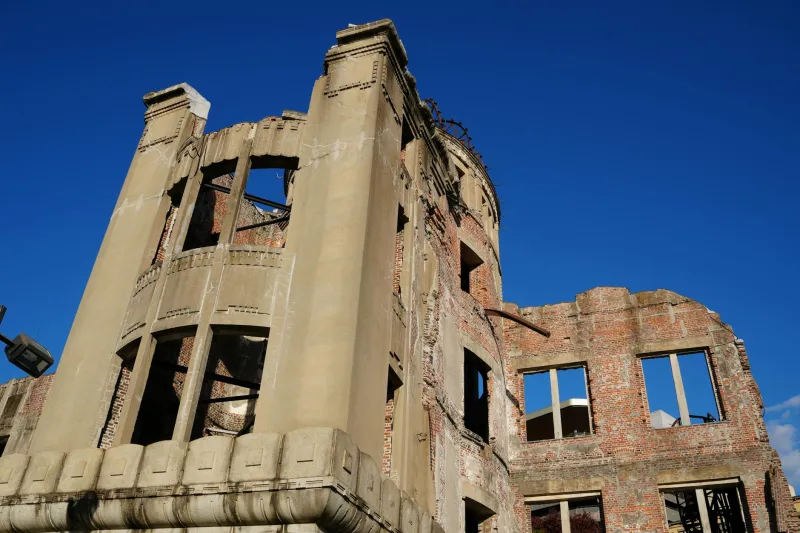
Imagine surviving the world's first nuclear attack, only to find yourself directly in the path of the second one just three days later. It sounds like the plot of a dark comedy, but for Tsutomu Yamaguchi, it was just an impossibly unlucky week in August 1945.
Yamaguchi was a 29-year-old naval engineer on a business trip to Hiroshima when his life took a turn that defies all probability. On the morning of August 6, 1945, he was walking to a Mitsubishi shipyard when a blinding flash lit up the sky above him.
The First Bomb: Wrong Place, Wrong Time
The atomic bomb "Little Boy" detonated roughly two miles from where Yamaguchi stood. The blast threw him into a potato patch, temporarily blinded him, and left him with severe burns on his left side. His eardrums burst from the pressure wave, and radiation began coursing through his body.
Most people caught that close to ground zero didn't survive. Yamaguchi did, though he spent the night in an air raid shelter with two colleagues who had also miraculously lived through the blast. The next morning, despite his injuries, he made a decision that would seem absurd to anyone else: he wanted to go home to his family in Nagasaki.
After spending two days traveling through a devastated landscape on damaged trains, Yamaguchi finally reached his hometown. He was badly burned, partially deaf, and suffering from radiation sickness. Any reasonable person would have stayed in bed to recover.
Instead, on August 9, Yamaguchi reported to work.
Lightning Strikes Twice
Yamaguchi was in his office at Mitsubishi's Nagasaki shipyard, trying to explain to his supervisor what had happened in Hiroshima. His boss was skeptical — how could one bomb destroy an entire city? That's when the second atomic bomb, "Fat Man," exploded over Nagasaki.
This time, Yamaguchi was about two miles from the blast zone again. The explosion knocked him unconscious and reopened his healing wounds from the first bombing. When he came to, he found himself in the middle of history's second nuclear attack.
The odds of being present for both atomic bombings were essentially zero. Hiroshima and Nagasaki are roughly 180 miles apart. The bombings happened only three days apart. For someone to be in both cities at exactly the wrong moments required a combination of circumstances so unlikely that it borders on mathematical impossibility.
A Bureaucratic Battle for Recognition
After the war, Yamaguchi faced an unexpected challenge: convincing the Japanese government that his story was true. For decades, he was officially recognized only as a Nagasaki survivor. The government seemed reluctant to acknowledge that someone could have experienced both attacks.
It wasn't until 2009 — more than 60 years later — that Japan finally recognized Yamaguchi as a "nijū hibakusha," or double survivor. By then, he was 93 years old and one of the few remaining witnesses to both atomic bombings.
The recognition process revealed just how rare Yamaguchi's experience was. While approximately 165 people are believed to have been present during both bombings, Yamaguchi was the only person officially certified by the Japanese government as a double survivor.
The Human Body's Stubborn Refusal to Quit
What makes Yamaguchi's story even more remarkable is his longevity. Despite being exposed to massive amounts of radiation twice, he lived to be 93 years old. He worked for decades after the war, raised three children, and remained mentally sharp until his death in 2010.
Medically speaking, his survival challenges everything we know about radiation exposure. The doses he received should have killed him quickly, or at least dramatically shortened his life. Instead, his body somehow processed and survived radiation levels that proved fatal to thousands of others.
Yamaguchi himself seemed amazed by his own durability. In later interviews, he described feeling like he had been chosen to survive for a reason — perhaps to serve as a living reminder of nuclear warfare's human cost.
A Living Testament to the Unthinkable
Yamaguchi spent his later years speaking about his experiences, becoming an advocate for nuclear disarmament. He met with world leaders and shared his story with anyone who would listen, always emphasizing the same message: no one should ever experience what he had lived through.
His survival story reads like fiction because the human mind struggles to process such extreme circumstances. How does someone accidentally find themselves at the epicenter of humanity's two greatest acts of destruction? How does a person's body withstand that much trauma and still function for another 65 years?
Tsutomu Yamaguchi's life proves that sometimes reality creates stories so unlikely that fiction writers wouldn't dare attempt them. His tale of impossible survival stands as one of history's most remarkable examples of being in the wrong place at the wrong time — twice — and somehow living to tell about it.