The Border That Isn't Quite Where Everyone Agreed It Would Be — And Has Been Wrong for 150 Years
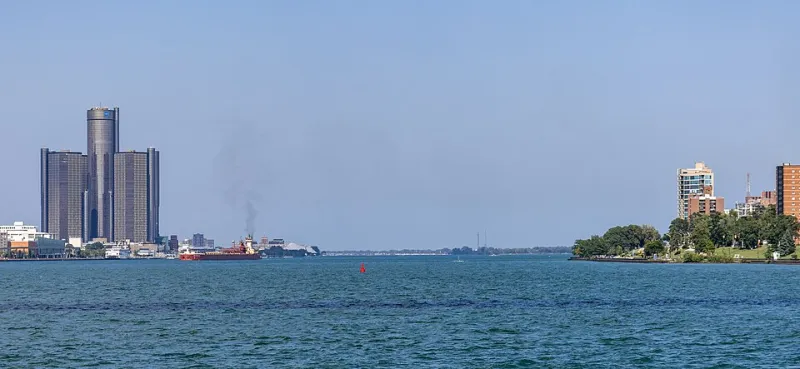
Photo: Chris Woodrich, CC BY-SA 4.0, via Wikimedia Commons
A Line in the Ground That Doesn't Match the Line on the Map
The border between the United States and Canada is, depending on how you want to look at it, either the world's longest peaceful international boundary or one of the most impressively maintained legal fictions in the Western Hemisphere. Mostly it's both.
The 49th parallel — the straight east-west line that defines the border from Minnesota to Washington state — was established by treaty in 1818 and surveyed in physical detail over the following decades. It is, in theory, a clean and unambiguous thing: a latitude line, marked by stone monuments and metal posts, running across the northern plains with bureaucratic precision.
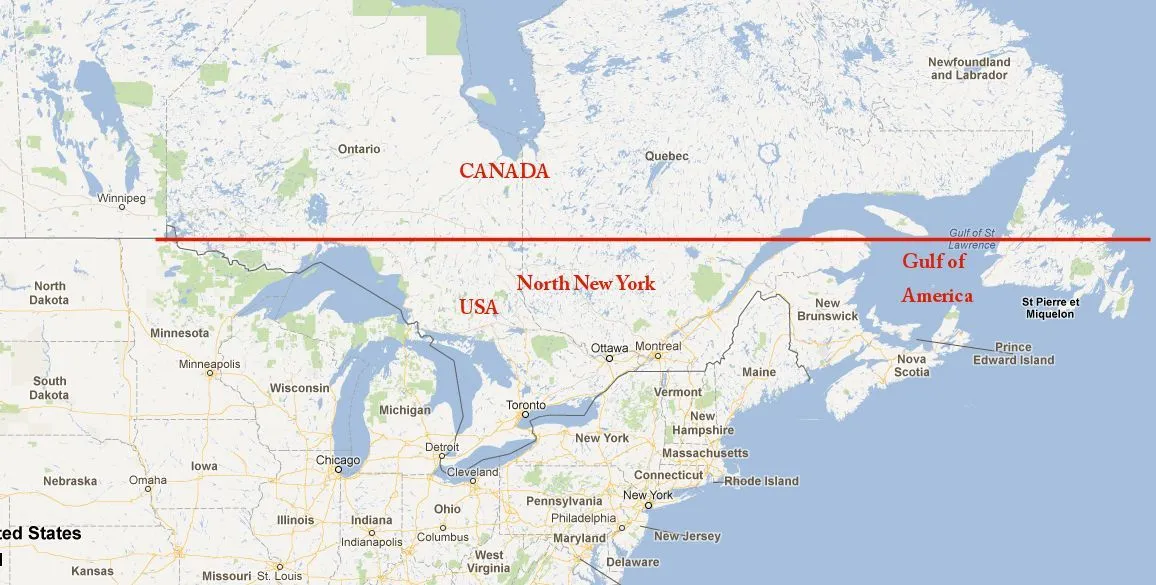 Photo: 49th parallel, via i.pinimg.com
In theory.
In practice, there is a stretch of land in north-central North Dakota, near the small community of Westhope, where the physical border marker and the treaty-defined boundary disagree by somewhere between 800 feet and a quarter mile, depending on which survey you trust. The ground says one thing. The paperwork says another. And for roughly 150 years, both governments have known about it and done essentially nothing.
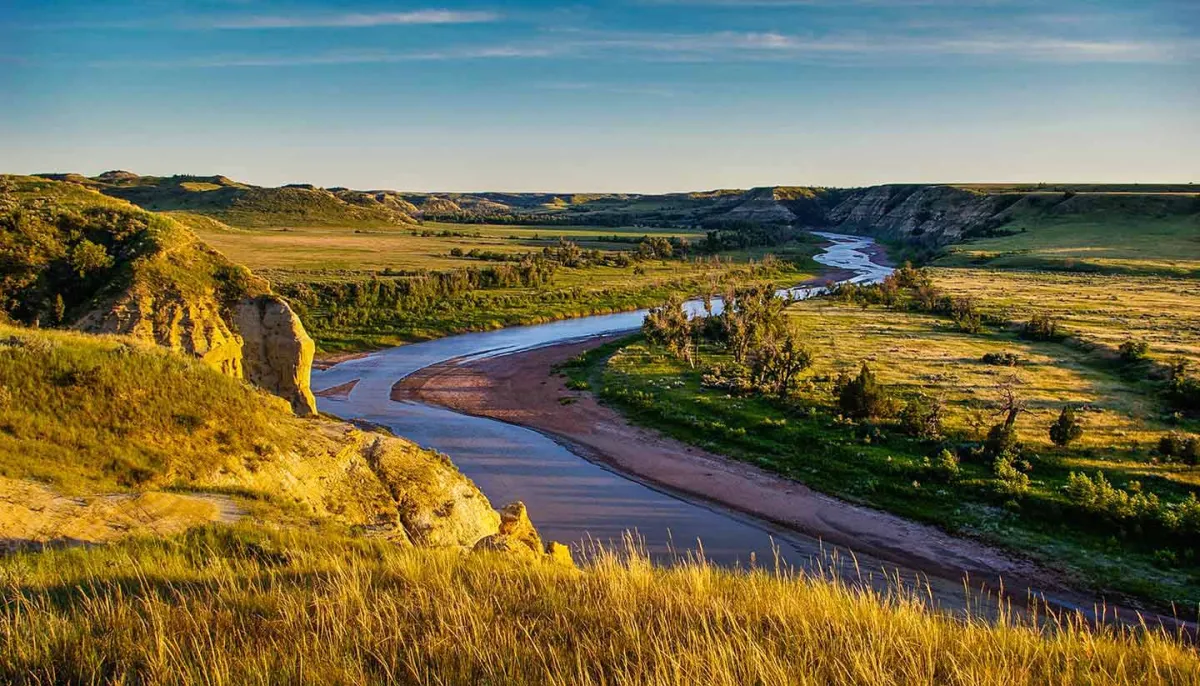 Photo: North Dakota, via www.worldtravelguide.net
How You Lose a Border
The original survey of the 49th parallel through the Dakota Territory was conducted in the early 1870s by joint American and British commissions — Canada was still a British dominion at the time, and the British handled the northern side of the line. It was painstaking, expensive, and conducted under genuinely difficult conditions: flat terrain that made sighting difficult, magnetic anomalies that threw off compass readings, and winters that halted work for months at a time.
The surveyors did their best. Their best was quite good across most of the boundary. But in certain stretches, particularly in areas with minimal topographic variation and challenging magnetic conditions, small errors accumulated. A fraction of a degree off at one monument compounded over miles to produce a meaningful displacement by the time the next monument was set.
In the Westhope area, this appears to be exactly what happened. The physical monuments — the iron posts and stone cairns actually placed in the ground — trace a line that runs slightly south of where the mathematical 49th parallel actually sits. The discrepancy was noted in survey records as early as the 1890s, flagged again during a resurvey in the 1920s, and acknowledged in a joint boundary commission report in the 1970s.
The monuments were never moved.
What a Quarter Mile Actually Means Out Here
On a map of North America, a quarter mile is invisible. On the northern edge of North Dakota, it is someone's farm.
The gray zone created by the discrepancy is not a dramatic no-man's-land. It looks like every other acre of the northern plains: flat, agricultural, occasionally punctuated by a grain elevator or a gravel road. Most of the land in question has been privately owned and actively farmed for generations, by families who settled it under the assumption that they knew which country they were in.
For most practical purposes, they did. The customs checkpoint, the laws they lived under, the taxes they paid — all of these operated according to the physical markers on the ground, not the theoretical treaty line. The discrepancy existed as a bureaucratic abstraction rather than a lived reality.
But it was never entirely invisible either.
Farmers whose property sat near the marker line sometimes discovered, when consulting detailed survey records for estate purposes or land sales, that the legal description of their land referenced one country while the physical boundary suggested another. Title insurance companies occasionally flagged parcels in the zone. Attorneys handling cross-border estate issues encountered it. It was the kind of problem that surfaced just often enough to be annoying and not often enough to force a resolution.
Why Nobody Fixed It
This is the part of the story that says the most about how governments actually work.
Correcting the border would require, at minimum, a renegotiation of the relevant boundary treaty provisions, a new joint survey, formal relocation of the physical monuments, and — most complicatedly — a legal resolution of the land status of every parcel affected by the change. That last piece is the real obstacle.
If the border moved north to its treaty-correct position, land currently considered American would technically become Canadian. The owners of that land — American citizens, paying American property taxes, governed by American law for their entire lives — would suddenly find themselves in a foreign country. The inverse is also true in smaller measure on the Canadian side.
No treaty mechanism for compensating or relocating those landowners exists. Creating one would require an act of Congress, parallel Canadian legislation, and the kind of sustained political will that tends to evaporate quickly when the problem affects a few hundred acres in a sparsely populated corner of the country that most policymakers couldn't find on a map without help.
So the monuments stay where they are. The treaty line stays where it is. And the gap between them stays unresolved.
Living in the Seam
What's quietly remarkable about the Westhope situation is how little it has disrupted actual human life. The families on both sides of the marker have, for generations, maintained the neighborly cross-border relationships that characterize much of the rural northern plains. They share equipment, attend the same regional events, and have largely treated the line as an administrative detail rather than a meaningful divide.
Customs enforcement in the area operates from the physical marker, and both governments have tacitly agreed to treat that as the operative boundary for practical purposes. The theoretical discrepancy exists in survey records and legal archives, acknowledged but unpursued.
In a way, the Westhope situation is a small-scale illustration of something larger: that the borders humans draw are always, to some degree, approximations. The 49th parallel was chosen because it was clean and mathematical and easy to describe in a treaty. The physical reality of marking it across 1,300 miles of varied terrain introduced imprecision that no amount of political agreement could fully eliminate.
The line is where it is. The paperwork says otherwise. And out on the northern plains, the wheat doesn't particularly care either way.