The Mountain That Never Was: How a Cartographer's Mistake Became Official U.S. Geography
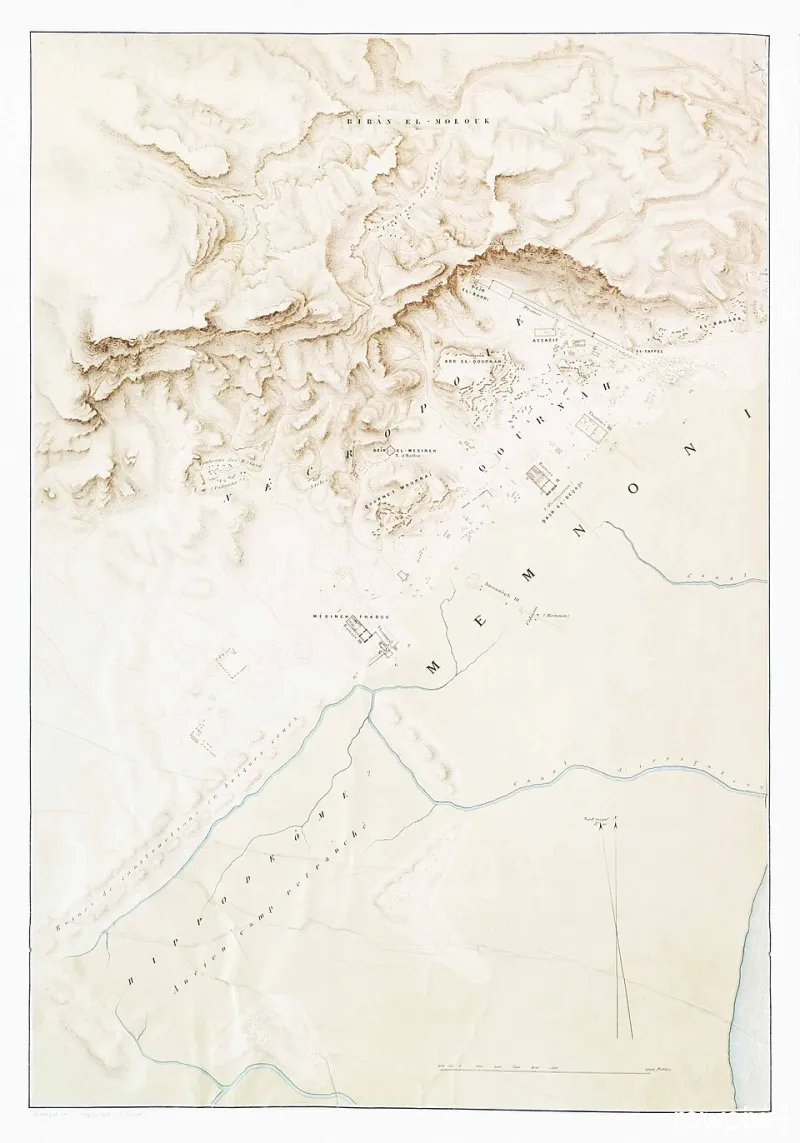
Photo: Rawpixel Ltd, CC BY 2.0, via Wikimedia Commons
The Mountain That Never Was: How a Cartographer's Mistake Became Official U.S. Geography
Maps are supposed to describe the world as it is. That's their entire purpose. And yet, buried in the official geographic record of the United States, there have existed places that were never there — rivers that didn't flow, towns that were never built, and at least one mountain that no human being has ever stood on top of, because it was never there to climb.
The story of one particular phantom peak is the kind of thing that makes you question how thoroughly anyone actually checks anything.
A Line in the Wrong Place
The error began, as these things often do, with a measurement. In the early twentieth century, survey teams working through remote stretches of the American West operated under conditions that were, to put it charitably, imprecise. Instruments were sensitive to temperature and elevation. Reference points were sometimes estimated rather than confirmed. And the cartographers back in the office, assembling field notes into publishable maps, occasionally made interpretive leaps that the raw data didn't quite support.
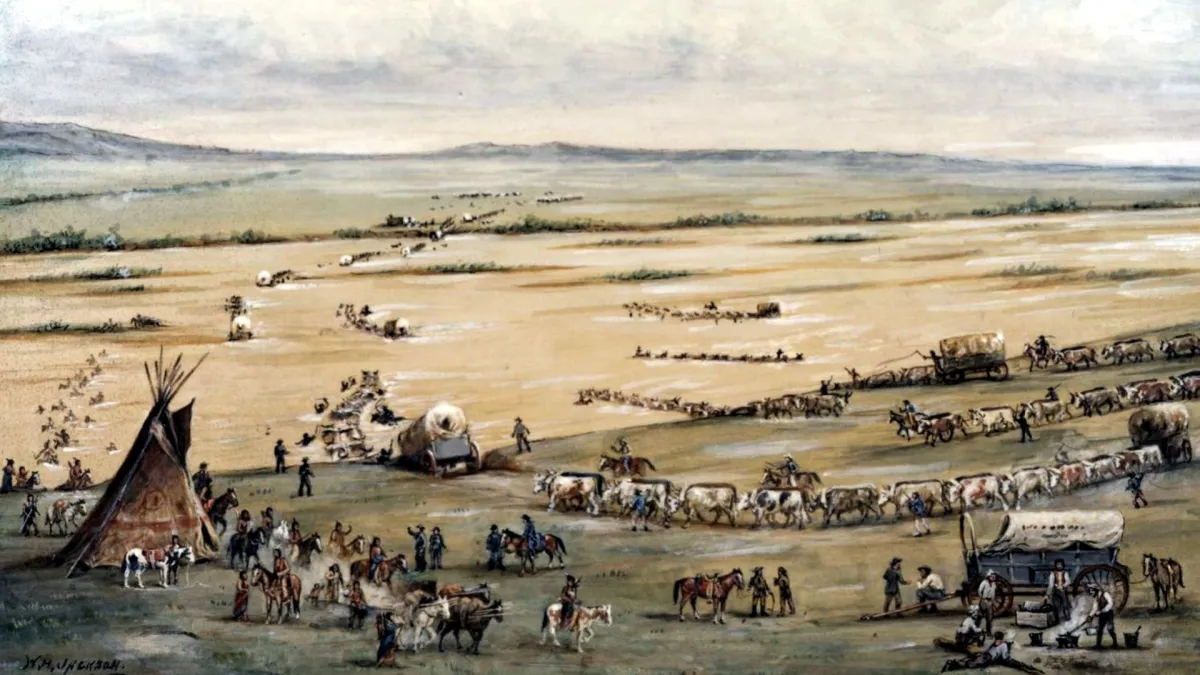 Photo: American West, via cdn.britannica.com
In this particular case, a surveyor's notation describing a prominent ridgeline was misread during the drafting process. The ridge — real, measurable, and correctly positioned — had an elevation marker attached to a secondary notation that, pulled out of context, suggested the presence of a distinct summit significantly higher than the surrounding terrain. The draftsman, working from incomplete field notes and under deadline pressure, plotted a peak.
The peak did not exist. But it was now on a map. And once something is on a map, it has a way of becoming permanent.
The Reproduction Problem
Here is where the story gets genuinely strange. Maps, especially government maps, don't get made from scratch every time they're updated. New editions are typically produced by correcting and revising existing editions, which means that errors in early versions have a tendency to persist unless someone specifically identifies and removes them. A phantom feature, once introduced, doesn't just disappear on its own — it has to be actively caught.
The fictional mountain was not caught. Instead, it was reproduced. When the original survey maps were revised and updated, the phantom peak moved forward into each new edition, gathering legitimacy with every reproduction. By the time the U.S. Board on Geographic Names — the federal body responsible for standardizing place names across the country — was formalizing its official geographic database in the mid-twentieth century, the mountain had been on maps long enough that it received an official name. The board didn't invent it; they simply formalized what appeared to already exist.
 Photo: U.S. Board on Geographic Names, via www.powershow.com
At some point, a name appeared in print. Then in regional guidebooks. Then, inevitably, in tourism materials for the surrounding area, which referenced the mountain as a notable geographic feature of the landscape — a landscape that, in reality, contained no such feature.
The Hike That Found Nothing
The unraveling began in the 1970s, when a geologist conducting fieldwork in the region noticed a discrepancy between the mapped terrain and what he was actually looking at. The topography around the supposed mountain's coordinates was inconsistent with the elevation data on the official maps. The ridgelines didn't add up. The drainage patterns were wrong. Something was off.
He went looking. What he found, at the coordinates where a significant mountain was supposed to be, was ordinary high-desert terrain — rocky, elevated, scenic in its way, but definitively, irreversibly flat. There was no peak. There was no summit. There was nothing that could, by any reasonable interpretation of the word, be called a mountain.
His report to the U.S. Geological Survey triggered a review process that took years. Federal geographic corrections are not quick. They require documentation, committee review, and formal action by the Board on Geographic Names — the same body that had given the phantom peak its official designation in the first place. In the meantime, the mountain continued to appear on maps, continued to be listed in reference materials, and continued to attract the occasional confused hiker who couldn't understand why the trail never seemed to go anywhere interesting.
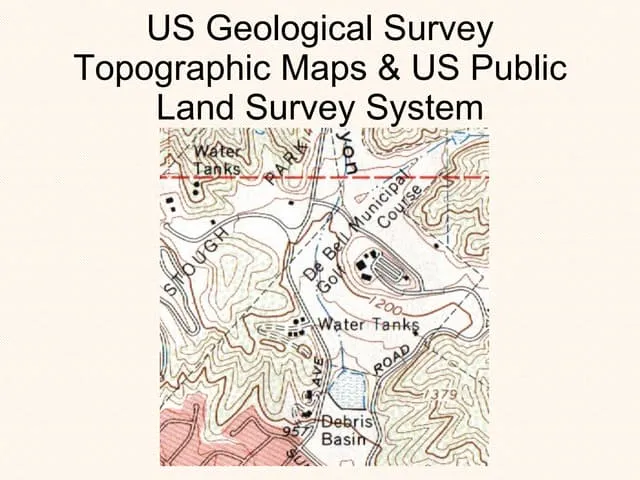 Photo: U.S. Geological Survey, via cdn.slidesharecdn.com
What Happens When a Place Gets Uncreated
The formal removal of a geographic feature from the official record is a surprisingly solemn process. The Board on Geographic Names doesn't simply delete entries — it issues a determination that a previously recognized name is discontinued, which itself becomes part of the permanent record. The mountain was officially un-named, its designation retired, its coordinates scrubbed from the active database.
But the ghost lingered. Old maps don't disappear when new ones are printed. Libraries, universities, and private collections held editions showing the mountain in its proper invented glory. Digital mapping databases, in the early years of their existence, sometimes pulled from historical records without distinguishing between verified and corrected data. For a period in the 1990s, at least one popular consumer mapping product still showed the peak, sending it into the new era of digital geography on the strength of its decades-old fictional credentials.
The Broader Lesson From a Mountain That Wasn't There
Cartographic errors are more common than most people realize. The practice of embedding deliberate fake features — so-called "trap streets" or "paper towns" — into commercial maps as copyright traps is well documented. But the phantom mountain wasn't a trap. Nobody put it there on purpose. It was a mistake that became a fact through sheer repetition and institutional inertia.
The American geographic record is vast. The systems that maintain it are thorough, but they were built to manage real places, not to actively hunt for imaginary ones. A feature that arrived in the database looking legitimate, with decades of map appearances behind it, had every reason to be trusted and no obvious reason to be questioned.
Somewhere in the American West, there is a stretch of terrain that was, for the better part of a century, officially a mountain. Hikers looked for it. Tourism boards mentioned it. Government databases named it. And the land itself just sat there, quietly, at a perfectly ordinary elevation, waiting for someone to notice it wasn't what anyone thought it was.