The Password Man: How One Florida Resident Legally Became a Wi-Fi Network and Gamed the System for Years
The Identity That Came with Free Wi-Fi
Meet the man formerly known as David Martinez, who in 2019 became the most connected person in America—literally. After legally changing his name to "Linksys_Default_5G2A4F," this Tampa resident spent three years convincing hotels, coffee shops, and businesses across the country that connecting to his name wasn't theft, but rather an unexpected loophole in terms-of-service agreements.
What started as a bet with his roommate over who could find the most creative way to save money on internet bills evolved into a masterclass in legal gray areas, corporate confusion, and the strange places where technology meets bureaucracy in modern America.
The Inspiration Behind the Ultimate Life Hack
Marinez—sorry, Linksys_Default_5G2A4F—was working as a freelance graphic designer when the idea struck. "I was constantly traveling for client meetings, and those hotel Wi-Fi charges were killing my budget," he explained in a 2022 podcast interview. "Five bucks here, ten bucks there—it adds up when you're staying in different places every week."
The lightbulb moment came during a particularly expensive stay at a Miami Beach resort, where he noticed the hotel's router naming convention followed the same pattern as millions of home networks: manufacturer name, followed by "Default," then a seemingly random string of numbers and letters.
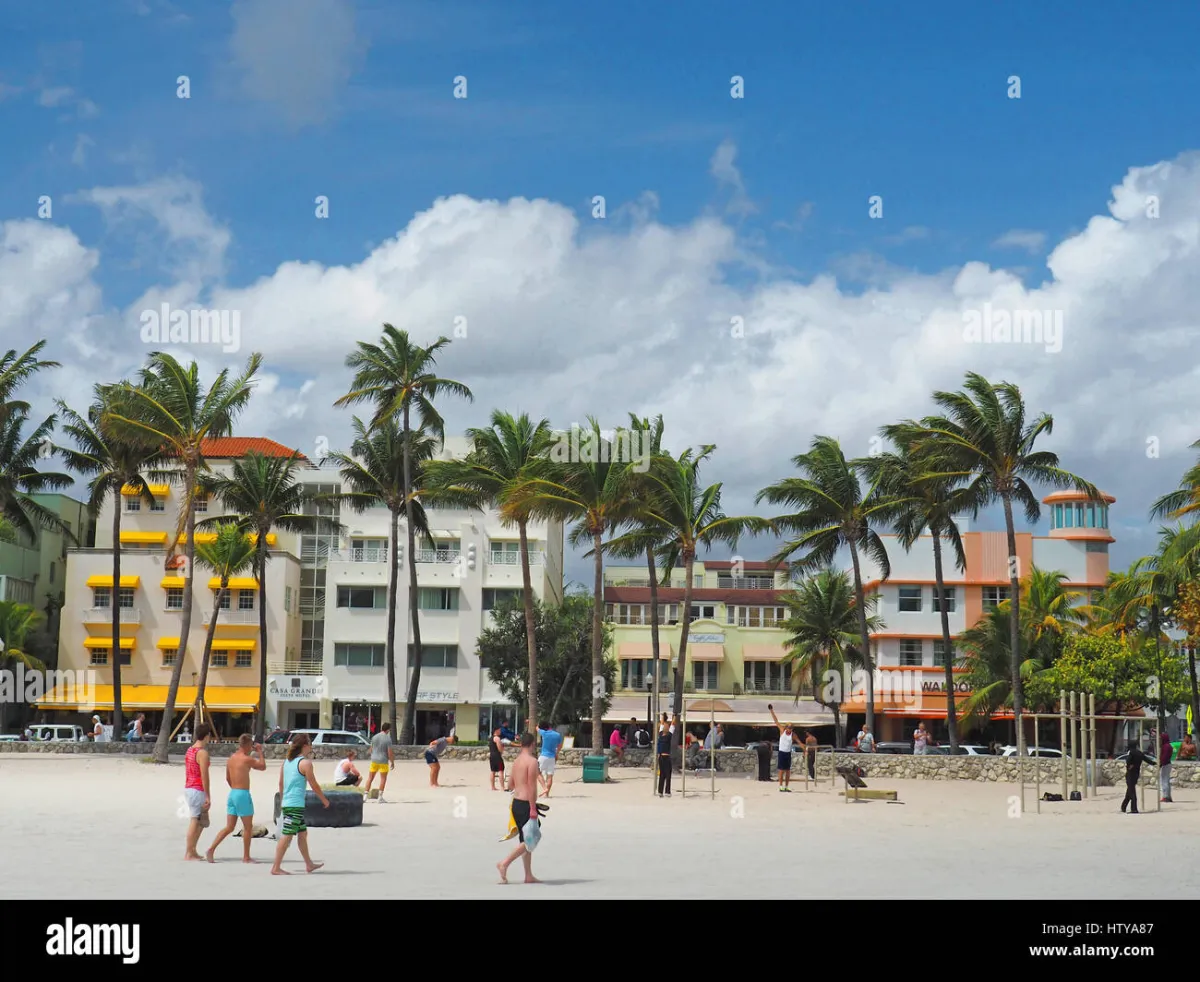 Photo: Miami Beach, via c8.alamy.com
"I started thinking: what if someone's actual legal name matched one of these passwords?" he recalled. "Would connecting to their name technically count as accessing their personal network?"
The Legal Name Change That Broke the Internet
After months of research into Florida's name change laws, Martinez filed the necessary paperwork with Hillsborough County. The process required a background check, a court appearance, and a surprisingly detailed explanation of why he wanted to abandon his birth name for what appeared to be a random string of characters.
"The judge asked me three times if I was sure," Linksys_Default_5G2A4F remembered. "I had to explain that it was for 'business purposes related to technology consulting.' Which wasn't technically a lie—I was consulting myself on how to get free internet."
The name change became official in March 2019, complete with a new driver's license, Social Security card, and passport bearing his unusual new identity. Armed with these documents, he began what he called "The Great Wi-Fi Experiment."
The Method Behind the Madness
Linksys_Default_5G2A4F's strategy was surprisingly sophisticated. He would arrive at hotels, coffee shops, or co-working spaces and politely approach the manager with his driver's license, explaining that their network appeared to be broadcasting his legal name as an available connection.
"I'd show them my ID and say something like, 'I think your router might be configured to my personal network name. Would it be okay if I connected to it?'" he explained. "Most people were so confused by the situation that they'd just say yes."
The approach worked with startling frequency. Hotel managers, uncertain about the legal implications of denying someone access to what appeared to be their own network, often provided not just permission but actual assistance in connecting his devices.
The Corporate Confusion Factor
What made the scheme particularly effective was the genuine bewilderment it created among business staff. Customer service representatives, faced with a situation not covered in any training manual, often escalated the matter to managers who were equally perplexed.
"I had one Starbucks manager call corporate headquarters to ask if they could legally prevent someone from connecting to their own name," Linksys_Default_5G2A4F recalled with obvious pride. "The corporate lawyer they eventually reached apparently spent twenty minutes trying to understand the question."
The confusion was compounded by the fact that many businesses had never actually read their own Wi-Fi terms of service agreements, which typically prohibited unauthorized access but didn't address situations where the network name matched someone's legal identity.
The Three-Year Run
For nearly three years, the strategy worked across twelve states and hundreds of establishments. Linksys_Default_5G2A4F estimates he saved over $3,000 in internet charges while maintaining what he insisted was a technically legal approach to network access.
"I never hacked anything," he emphasized. "I never bypassed passwords or broke encryption. I just connected to networks that businesses willingly gave me access to after seeing my identification."
The scheme's success led to increasingly bold attempts. He began targeting high-end hotels and conference centers, where premium Wi-Fi charges could reach $30 per day. His masterpiece was convincing a Las Vegas casino to provide him with VIP internet access after explaining that their network was "broadcasting his identity."
 Photo: Las Vegas, via c8.alamy.com
When the FCC Came Calling
The party ended in 2022 when a hotel chain's corporate security team flagged the unusual pattern of "network name matches" across their properties. Their investigation led to a complaint filed with the Federal Communications Commission, arguing that Linksys_Default_5G2A4F was exploiting a technical loophole to commit what amounted to service theft.
The FCC investigation took eight months and ultimately concluded that while his approach was "technically novel," it constituted unauthorized network access under federal communications law. However, because he had obtained explicit permission from business representatives in each instance, criminal charges were deemed inappropriate.
The Verdict and the Return to Normalcy
Faced with potential federal sanctions and growing legal costs, Linksys_Default_5G2A4F agreed to cease his network-accessing activities and pay a $5,000 fine to settle the FCC complaint. In early 2023, he legally changed his name back to David Martinez, though he kept his unusual driver's license as a souvenir.
"It was a good run," Martinez reflected. "I proved that the intersection between technology and bureaucracy creates some pretty interesting opportunities. Plus, I probably have the strangest legal name change story in Florida history."
The Legacy of the Password Man
The case prompted several businesses to review their Wi-Fi policies and terms of service agreements. Some hotels now explicitly prohibit connections based on legal name matches, while others have simply switched to more complex network naming conventions.
Legal experts remain divided on whether Martinez's approach constituted theft or simply creative interpretation of ambiguous service terms. What everyone agrees on is that his three-year experiment highlighted the absurd complexity that emerges when analog legal systems try to govern digital interactions.
"It's a perfect example of how our laws haven't caught up to our technology," noted cybersecurity attorney Jennifer Walsh. "We have regulations written for a world where networks had clear owners and users, but what happens when someone's identity becomes part of the infrastructure itself?"
Today, Martinez works as a legitimate technology consultant, though he admits his former name still occasionally appears as an available network when he visits certain hotel chains. "Sometimes I'm tempted," he laughs, "but I've learned that some life hacks come with more complications than they're worth."