Jailhouse Mayor: The Small Town That Kept Voting Its Convicted Candidate Into Office — Twice
The Election Nobody Expected to Be a Problem
Picture a quiet election night in a small American town. Ballots are counted, a winner is declared, and the local paper runs a headline. Standard stuff — except this particular winner was sitting in a jail cell when the votes came in. And the jaw-dropping part? Local officials couldn't do a single thing about it.
This isn't a hypothetical. It happened in Centerton, Arkansas, a small community in Benton County that found itself tangled in one of the more improbable political knots in recent American history. In 2008, Ken Williams won the mayoral race while serving time on felony charges. Then, almost unbelievably, history repeated itself. The town's election machinery had a gap in it wide enough to drive a campaign bus through — and nobody had thought to patch it.
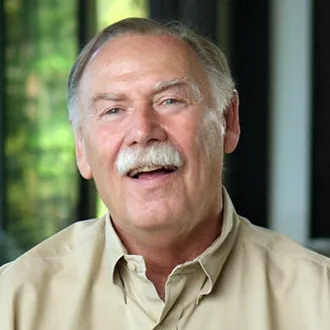 Photo: Ken Williams, via adventuregamefanfair.com
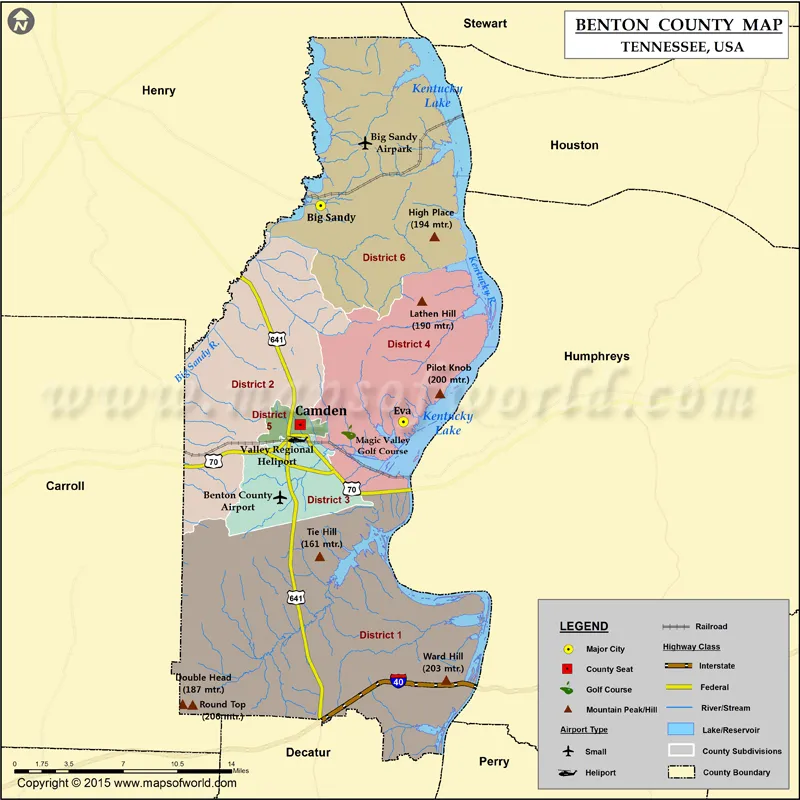 Photo: Benton County, via www.mapsofworld.com
How Does Something Like This Even Happen?
The answer lies in something most Americans never think about: the surprisingly sparse rulebook that governs small-town elections.
Federal elections come with layers of oversight, qualification requirements, and legal tripwires. But at the hyper-local level — mayors of small municipalities, town council seats, county positions — the rules can be remarkably thin. Many states set the baseline qualifications for local office as little more than residency and age. Criminal status, in many jurisdictions, simply isn't disqualifying on its own — at least not at the point when someone files to run.
In Centerton's case, Williams had filed his candidacy paperwork before his legal troubles escalated to the point of incarceration. Once a name is on the ballot, removing it is a legally complicated process that typically requires a court order or a specific statutory mechanism — neither of which materialized in time. Voters cast their ballots, the math worked out in Williams's favor, and the town found itself with a mayor-elect who needed a furlough to attend his own swearing-in.
The Loophole That Wouldn't Close
What makes this story genuinely fascinating — beyond the obvious absurdity — is what happened next. Rather than triggering an immediate legislative scramble to close the gap, the situation exposed just how much small-town American governance runs on the quiet assumption that things will work out normally.
Local officials discovered that their options were limited. Challenging the election result required legal standing that wasn't easy to establish. Removing an elected official from office is a different legal process entirely from preventing someone from taking office, and the procedures vary wildly from state to state. In many municipalities, the only clean removal mechanism is a recall election — which, of course, requires organizing another vote.
The situation also highlighted something that legal scholars had noted for years: small-town democracy in America operates on a kind of honor system. The assumption built into most local election codes is that candidates will be, more or less, conventional participants. The rules were written for normal circumstances, and normal circumstances don't usually include someone running a campaign from a corrections facility.
The Second Time Around
If the first win was a fluke, the second was something else entirely — a genuine stress test of the system.
After the initial term played out through a combination of legal maneuvering and eventual resignation, Williams's name surfaced again in subsequent local political activity. The underlying loophole had not been meaningfully addressed. The same structural gap that allowed the first win remained intact, a quiet fault line in the foundation of local governance.
This pattern — where an extraordinary event exposes a systemic weakness, the community is briefly scandalized, and then the weakness remains unaddressed — is more common in American civic life than most people realize. The machinery of local government was largely designed in an era when communities were small enough that everyone knew everyone, and social pressure did the work that formal rules didn't bother to do.
What This Actually Tells Us About Democracy
It would be easy to treat this story purely as comedy — and honestly, there's plenty of comedic material here. But the more interesting takeaway is structural.
American democracy is often discussed as a single, unified system with robust protections at every level. In reality, it's a patchwork. Federal elections are tightly regulated. State elections are moderately regulated. And then you get down to the local level, where some jurisdictions are running their civic lives on rules written decades ago, with qualification standards that were never designed to handle edge cases.
The Centerton situation didn't break any laws, technically. That's precisely what made it so strange — and so revealing. A man won the mayoralty from behind bars not because the system failed, but because the system had simply never anticipated needing to handle that particular scenario.
The Thin Rulebook of Small-Town America
After the story drew national attention, Arkansas did eventually revisit some of its local election statutes. But Centerton's accidental experiment in jailhouse governance had already made its point.
Across the country, thousands of small municipalities operate under election codes that are similarly skeletal. The assumption has always been that community norms, social accountability, and basic common sense would fill in the gaps. Most of the time, they do. But every so often, a situation arises that the rulebook simply never imagined — and what happens next reveals exactly how much of American democracy runs on trust rather than law.
In Centerton, the trust broke down in the most literal way possible. The mayor was in jail. The election was valid. And the town had to figure out what came next without a manual to guide them.
Strange? Absolutely. Unprecedented? Mostly. But illegal? Not even close — and that's the part that should make every civics teacher in America sit up a little straighter.