The New Deal Program That Paid Farmers to Burn Food While Americans Went Hungry
The Most Counterintuitive Policy in American History
In the summer of 1933, as millions of Americans stood in bread lines and soup kitchens stretched around city blocks, the federal government was paying farmers to destroy food.
Cotton fields were plowed under. Corn was burned as fuel. And in one of the most viscerally disturbing episodes of the entire New Deal era, approximately six million piglets and pregnant sows were purchased by the government and slaughtered — their carcasses processed into grease and fertilizer, or in many cases simply buried.
The program was called the Agricultural Adjustment Act, and it was, in a deeply uncomfortable way, based on sound economic reasoning. That it also produced some of the darkest and most surreal moments in American economic history is not a contradiction. It's the whole point.
The Problem the AAA Was Trying to Solve
To understand why the government started destroying food, you have to understand what had happened to American agriculture in the years before the Depression hit.
Throughout the 1920s, American farmers had been producing at enormous scale, partly to meet wartime demand in Europe and partly because new mechanized farming equipment made large-scale production possible for the first time. When the economy collapsed in 1929 and international markets dried up, farmers were left with vast surpluses they couldn't sell at prices that covered their costs.
The cruel math of agricultural economics meant that more supply without more demand pushed prices down, not up. A bumper crop of cotton didn't make cotton farmers rich — it made them poorer, because the price per pound collapsed. Farmers across the South and Midwest were losing their land, defaulting on loans, and watching a lifetime of work evaporate.
The Roosevelt administration's solution was radical: reduce supply to raise prices. If there was less cotton on the market, cotton would be worth more per pound. If there were fewer pigs, pork prices would stabilize. Farmers would receive government payments to compensate for the crops they didn't grow and the animals they didn't raise.
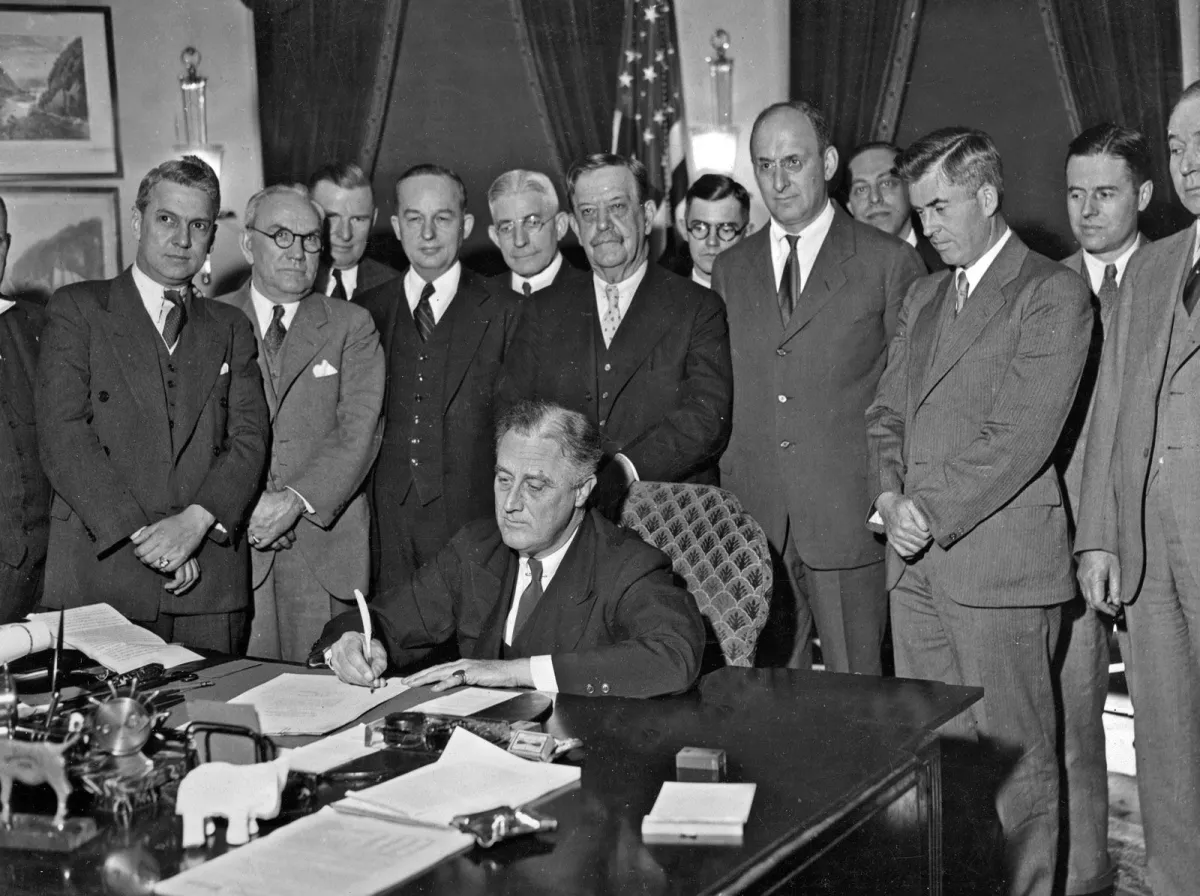 Photo: Roosevelt administration, via cdn.britannica.com
The logic was textbook economics. The optics were catastrophic.
Six Million Pigs and the Public Outrage That Followed
The pig slaughter of 1933 became the program's defining symbol — and its most enduring wound.
The federal government, through the newly formed Agricultural Adjustment Administration, moved quickly. Agents fanned out across farming states, purchasing livestock that farmers agreed to remove from the market. The pigs were slaughtered, and the government tried to salvage what it could — some meat was processed and distributed to relief agencies, though the logistics of moving that volume of product were genuinely difficult in 1933.
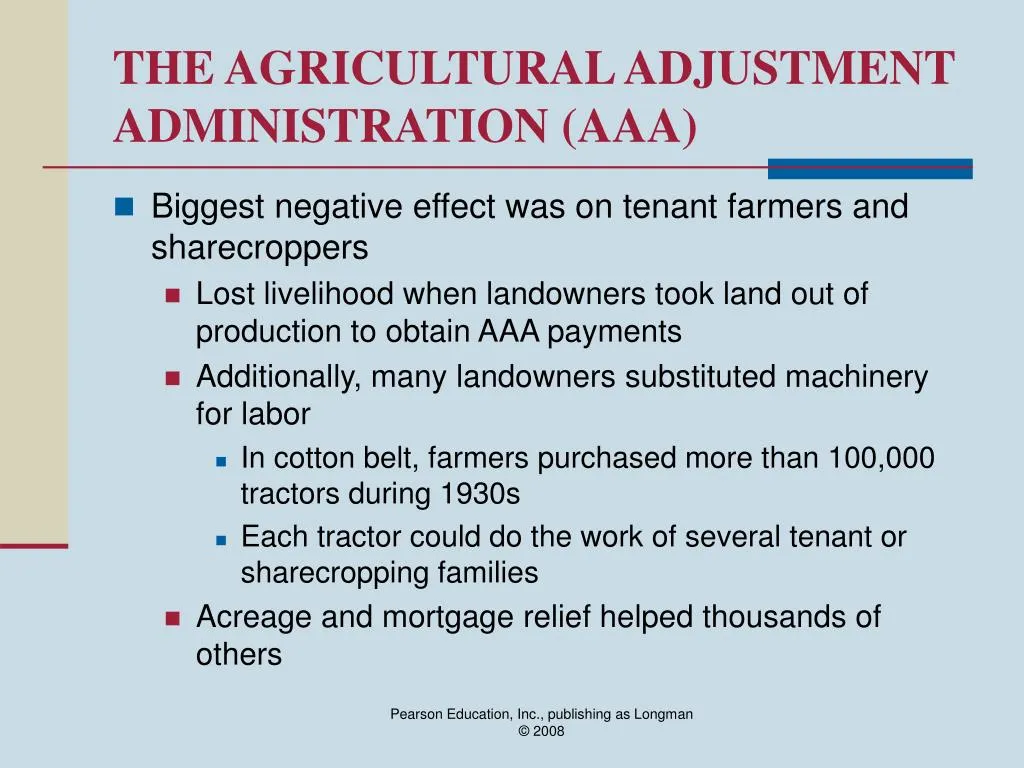 Photo: Agricultural Adjustment Administration, via image.slideserve.com
But the images and stories that reached the public were not of orderly relief distribution. They were of animals being killed in bulk, of waste on a staggering scale, at a moment when Americans were going without. The political backlash was immediate and ferocious.
Critics from every corner of the political spectrum lined up to condemn the program. Conservatives called it government overreach and socialist planning. Liberals called it morally obscene. Religious leaders called it a sin. Editorial cartoonists had a field day. The image of a government bureaucrat presiding over the destruction of food while children went hungry became one of the Depression era's most potent symbols of policy gone wrong.
Henry Wallace, the Secretary of Agriculture who oversaw the program, spent years defending it and never quite escaped its shadow. He acknowledged the moral discomfort directly, writing that the slaughter was 'a shocking commentary on our civilization' — while also maintaining that it was necessary.
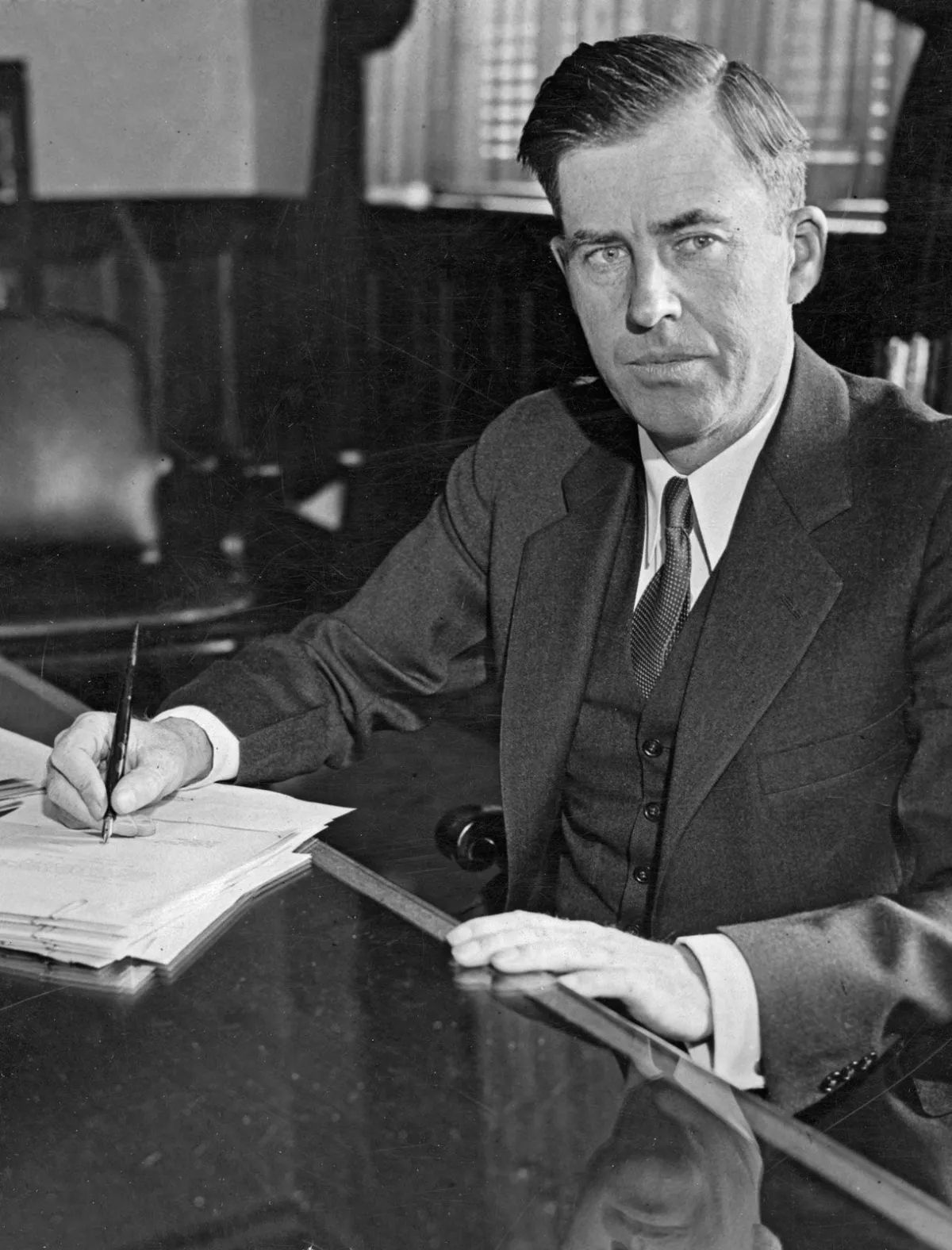 Photo: Henry Wallace, via cdn.britannica.com
The Unintended Consequences That Outlasted the Crisis
The AAA worked, in narrow economic terms. Farm prices did rise. The agricultural sector did stabilize. Farmers who had been on the edge of ruin found some relief.
But the program's unintended consequences were significant, and some of them proved remarkably durable.
The most immediate problem was that the benefits of the program flowed primarily to landowners, not to tenant farmers and sharecroppers — the poorest and most vulnerable people in American agriculture. When a landowner agreed to take acres out of production, the tenant farmers who worked those acres lost their livelihoods. Across the South in particular, the AAA accelerated the displacement of Black sharecroppers who had already been living on the margins.
The program also established a template for agricultural subsidies that proved almost impossible to dismantle. Once farmers had organized politically around the idea of government price supports, the system developed powerful constituencies that lobbied to preserve it long after the emergency that created it had passed. The basic architecture of federal farm subsidies — paying farmers to manage supply, compensating them for not producing certain crops — persisted for decades, eventually evolving into programs that critics argued were paying wealthy agribusinesses not to farm land they might not have farmed anyway.
Surplus destruction schemes, in modified forms, showed up repeatedly in postwar American agricultural policy. The logic of managing supply to maintain prices became embedded in how the government thought about farming, even when the circumstances were nothing like the emergency of 1933.
The Surreal Arithmetic of Depression-Era Policy
What makes the AAA story so persistently strange is the gap between the policy's internal logic and its human reality.
The economists were not wrong that supply and demand worked the way they said it did. Reducing supply did raise prices. Raising prices did help stabilize the farm sector. By the cold arithmetic of macroeconomics, the program achieved what it set out to achieve.
But the cold arithmetic of macroeconomics is a brutal thing to apply when people are hungry. The fundamental strangeness of the situation — a country destroying food because it had too much of it, while simultaneously running bread lines because people couldn't afford to buy it — exposed a gap between economic systems thinking and human moral intuition that the Depression generation never quite forgot.
The AAA didn't create the Depression. It didn't cause the hunger. The hunger existed because of collapsed wages and mass unemployment, not because of food scarcity. But try explaining that to someone watching piglets being loaded onto government trucks while their family went without.
Some policy decisions are simultaneously correct and wrong. The Agricultural Adjustment Act of 1933 might be the most dramatic example in American history of exactly that paradox — a program that worked as designed, failed as a moral statement, and left a mark on American governance that has never entirely faded.