He Read the Fine Print on a 200-Year-Old Deed — and Sent the County Government an Invoice
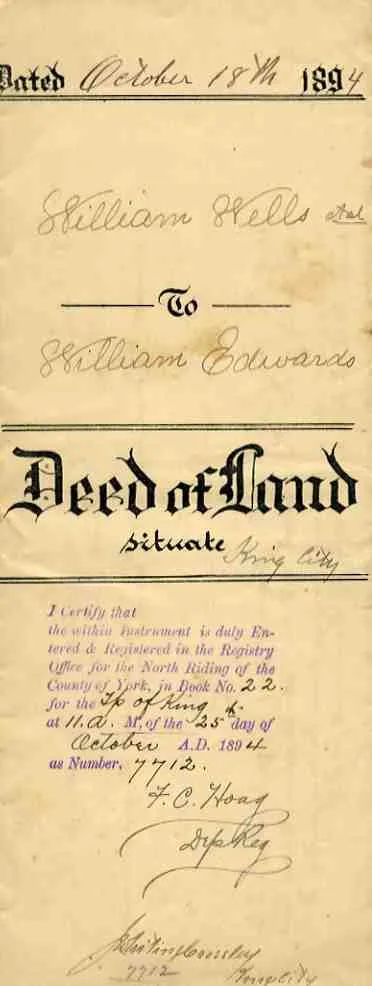
Photo: Unknown authorUnknown author, Public domain, via Wikimedia Commons
Most property disputes involve a fence in the wrong place or a neighbor who built a deck six inches over the property line. They are resolved with a surveyor, a mediator, and occasionally a strongly worded letter. They do not typically involve a retired engineer invoicing a county government for the use of its own roads.
But that is more or less what happened in rural Virginia, when a man named Gerald Fitch — patient, methodical, and possessed of a truly remarkable tolerance for historical documents — spent several years combing through land records and emerged with what he believed was an airtight legal argument that the county had been using his property without his permission for the better part of three decades.
 Photo: Gerald Fitch, via cdn.nba.com
He was not entirely wrong.
The Paper Trail That Started Everything
Fitch had purchased a farmstead in the early 1990s, a modest parcel of land that had changed hands several times over the preceding century. The property came with the usual stack of title documents, and Fitch, being an engineer, actually read them. All of them. Including the ones from 1887.
What he found buried in a nineteenth-century deed transfer was a specific and unusual clause governing road access across the property. The original landowner, in conveying a portion of his holdings to a neighbor, had retained a reversionary interest in a strip of land described in the deed as a "cartway" — a formal legal term for a private right-of-way used for wagon access. The clause stipulated that if the cartway ceased to be used for its original agricultural purpose, the land rights would revert to the original family's heirs.
The agricultural purpose had, in fact, ceased. The cartway had been absorbed into the county road system sometime in the 1950s, paved over, and expanded into what was now a functioning public road. The reversion clause had apparently never been noticed, never been acted upon, and never been formally extinguished.
Fitch began researching whether he was, through the chain of title, a successor to those original land rights. After several months of work — and several hundred dollars in county records fees — he concluded that he was.
The Invoice
To be clear, Fitch was not a crank. He didn't show up at county commission meetings waving papers and making threats. He hired a property attorney, assembled a formal legal brief, and sent a letter to the county administrator explaining his findings and requesting a meeting to discuss what he characterized as an unresolved property rights issue.
The county's initial response was polite dismissal. These kinds of claims arrived periodically, usually without merit, and the standard procedure was to hand them to the county attorney, who would issue a brief rebuttal and close the file. The county attorney issued the rebuttal. Fitch responded with a forty-page documented counter-argument that included photocopies of every deed in the chain of title going back to 1863.
The county attorney read the forty pages. Then he called in outside counsel.
While the legal review was ongoing, Fitch sent his invoice. It was calculated based on standard Virginia easement valuation formulas, applied to the square footage of road surface overlying what he claimed was his property, multiplied by the years of use since his purchase date. The total came to somewhere in the range of $180,000. He noted that he was willing to negotiate.
The Constitutional Headache Beneath the Asphalt
The question of who owns the ground beneath a public road is one of the stranger corners of American property law. In most cases, the answer is straightforward: the government acquired the land either by purchase, condemnation, or formal dedication, and the title is clean. But the American road system grew organically over centuries, and not every strip of land that became a road was formally acquired. Some were absorbed through use, some through informal agreements, and some — as in Fitch's case — through a process that left the underlying property rights technically unresolved.
Virginia law, like the law of many states, recognizes the concept of a prescriptive easement, which is essentially the legal formalization of long-term use. If a government entity has been openly and continuously using a piece of private land for road purposes for a sufficient number of years, it may acquire a legal right to continue doing so, regardless of what the underlying deed says. But the length of time required, the nature of the use, and the question of whether formal notice was ever given are all highly fact-specific inquiries — exactly the kind of thing that keeps property attorneys employed.
Fitch's attorney argued that the county's use of the land, while long-standing, had never been formally adverse to his client's interest because his client's interest had never been formally established until the deed research uncovered it. The county's attorney argued that prescriptive easement rights had long since attached and that Fitch's reversionary interest, even if valid on paper, had been effectively extinguished by decades of public use.
Both arguments had merit. That was the problem.
How It Ended (Sort Of)
The case never went to trial. After two years of legal back-and-forth, the county and Fitch reached a settlement that was sealed under a confidentiality agreement — which means the exact terms aren't public record. What is known is that the county formally purchased a portion of the disputed land rights from Fitch for a sum that local officials described only as "fair market value," and that the relevant deed was updated to formally extinguish any remaining reversionary claims.
Fitch reportedly did not receive the full $180,000 he had invoiced. He also reportedly did not receive nothing.
The Roads Beneath Our Feet
What makes the Fitch case remarkable isn't that one man tried to charge his county rent for a public road. It's that he had a legitimate enough legal argument to force a settlement. Somewhere in the fine print of American property history — in the deed books and plat maps and courthouse basements of counties across the country — there are almost certainly other unresolved claims like his, waiting for someone patient enough to go looking.
The ground beneath a public road feels like the most obviously public thing imaginable. It's been paved, maintained, and driven on by generations of taxpayers. But American property law is old, complicated, and built on documents that were written long before anyone imagined the infrastructure that would eventually sit on top of them.
Gerald Fitch read the fine print. The county government, to its considerable surprise, discovered that the fine print read back.