Born From a Volcano, Gone in a Decade: The Country That Technically Existed and Then Didn't
Most countries take centuries to form. They accumulate history, borders, constitutions, and grudges over generations. They argue about flags. They fight wars over rivers.
One country skipped all of that. It was born from a volcanic eruption, declared its independence before the lava cooled, issued travel documents to anyone who asked, and then watched its entire territorial foundation dissolve back into the North Atlantic. The whole arc — from geological birth to national extinction — took less than a decade.
This is the story of a country that was absolutely real and is absolutely gone, and the strange gap between those two facts that international law still hasn't completely figured out how to fill.
The Island That Wasn't There Yesterday
In November 1963, fishermen working the waters southwest of Iceland noticed something alarming: the sea was boiling. Not metaphorically. The ocean was erupting.
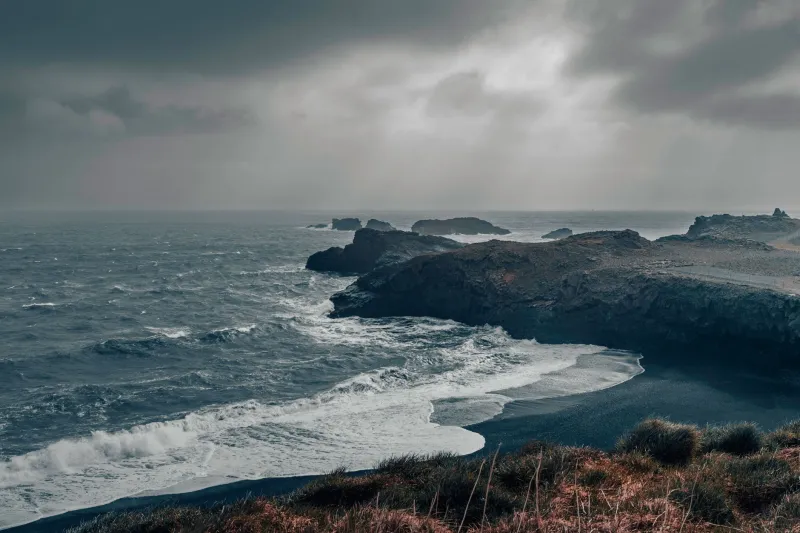
A submarine volcanic vent had opened on the ocean floor, and over the following days and weeks, it pushed enough material above the surface to create a genuine, measurable, walk-on-it island. Scientists named it Surtsey, after the Norse fire giant Surtur, and descended on it immediately — not just geologists and volcanologists, but biologists fascinated by the prospect of watching an ecosystem build itself from absolute zero.
Surtsey was remarkable for all of those scientific reasons. But it was a different island, created by a different eruption in a different part of the world, that attracted the attention of a very different kind of observer: the kind who looked at brand-new unclaimed land and saw a political opportunity.
The Activists Who Saw a Nation in the Making
The early 1960s were a golden era for breakaway political experimentation. Decolonization movements were reshaping the map. Micronations — small, self-declared sovereign entities — were beginning to capture the imagination of libertarians, anarchists, and people who simply found existing governments unsatisfying. The idea that a person or group could declare sovereignty over a piece of land and have it mean something was genuinely in the air.
When word spread that volcanic activity had created new land in the Atlantic — land with no prior ownership, no existing population, and no obvious sovereign claim — a small group of political activists, primarily from Europe, moved quickly. They landed on the island, planted a flag, drafted a declaration of independence, and announced to anyone who would listen that they had founded a new nation.
They named it. They established a governing structure, however skeletal. They created passports — actual physical documents — and issued them to founding members and sympathizers around the world. They wrote to the United Nations. They contacted foreign governments. They were, by every measure they could control, serious.
What International Law Says About Instant Countries
Here's the uncomfortable truth about declaring a new nation: the rules are both clear and completely unenforceable.
The Montevideo Convention of 1933 — the closest thing international law has to a checklist for statehood — requires a permanent population, a defined territory, an effective government, and the capacity to enter into relations with other states. It's a framework, not a guarantee. And critically, it says nothing about what happens when the territory in question is actively eroding.
The island the activists claimed was geologically unstable from the moment it emerged. Volcanic islands formed by submarine eruptions are notoriously fragile. The same forces that push material above sea level also subject it to constant wave erosion, and without sustained volcanic activity to keep building the island up, the ocean tends to win.
The founders of this impromptu nation knew this on some level. They proceeded anyway, which depending on your perspective was either admirably idealistic or magnificently delusional.
No existing government formally recognized their declaration. The United Nations did not respond with enthusiasm. Iceland, as the nearest sovereign state, maintained a politely skeptical silence.
A Government in Exile Before the Ink Was Dry
As the island began to visibly shrink — wave erosion was measurable within the first couple of years — the self-declared nation's government made a transition that was both pragmatic and philosophically fascinating: it relocated to the mainland and declared itself a government in exile.
This was not without precedent. Governments in exile have a long and occasionally legitimate history in international relations. But typically, a government in exile is fleeing an occupying force or a coup — not geology. The idea that a government could be exiled by tidal erosion was, to put it mildly, novel.
The passports continued to circulate. The founding documents were preserved. Meetings were held. The nation maintained, at least in the minds of its founders and the small community of people who held its travel documents, a kind of theoretical existence even as its physical basis disappeared beneath the waves.
The Legacy of a Country That Lasted a Few Years
The island is gone now, or close enough to gone that it makes no practical difference. What remains is a legal and philosophical curiosity that scholars of international relations occasionally dig up when they need an example of the absolute outer limits of statehood theory.
The passports, where they still exist, are collector's items. The founding documents have been archived. The people who participated in the experiment are, for the most part, elderly now — some of them still quietly insistent that the nation they founded retains some form of legal existence, its sovereignty merely suspended rather than extinguished.
International law doesn't really have a mechanism for the extinction of a state by natural causes. It has frameworks for annexation, dissolution, and merger. It doesn't have a clean answer for what happens when the land itself stops existing.
Which means that somewhere in the technical margins of legal theory, this country might still be out there — stateless, landless, and stubbornly refusing to admit that the ocean won.
That's either the saddest story in political history or the most determined one. Possibly both.