How a Boston Businessman Turned Frozen Pond Water Into a Global Empire — and Then Watched It Melt Away Overnight

A Product That Disappears the Moment You Sell It
Somewhere in the history of American commerce, there is a hall of fame for audacious business ideas. Near the top of that list belongs a man who decided, in the early 1800s, that he was going to harvest frozen water from Massachusetts ponds, pack it in sawdust, load it onto ships, and sell it to people in tropical climates who had never once thought they needed it.
Everyone around him thought he had lost his mind. He had not. What Frederic Tudor built over the next several decades was one of the most consequential — and most completely forgotten — commercial revolutions in American history. He didn't just sell ice. He rewired how an entire civilization thought about food, drink, and daily comfort.
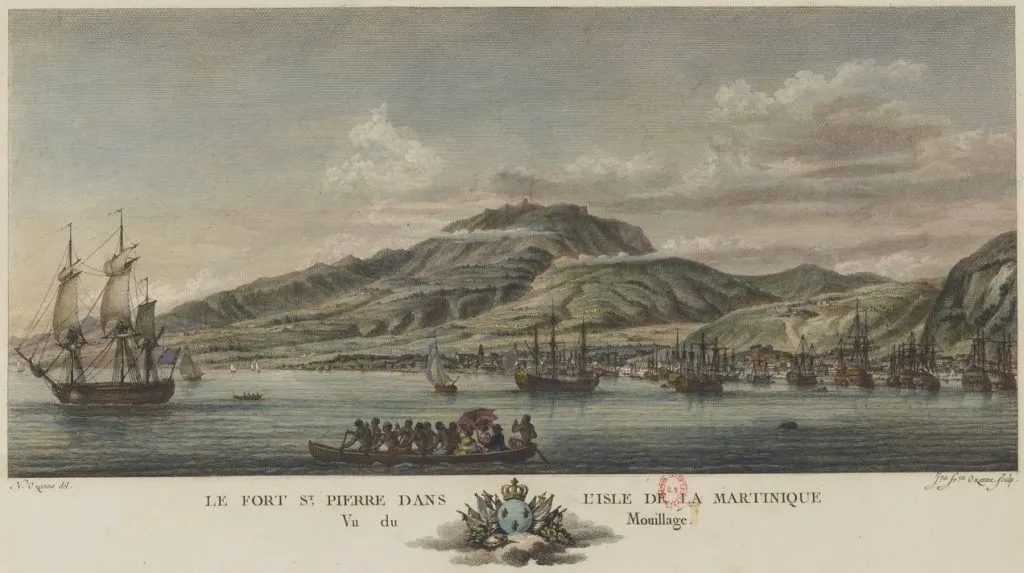 Photo: Frederic Tudor, via investoramnesia.com
The Man Who Decided Pond Water Was a Commodity
Frederic Tudor was twenty-one years old when he came up with the idea, and he was already the kind of person who couldn't be talked out of things. In 1806, he loaded a ship with 130 tons of ice cut from a pond outside Boston and sailed it to Martinique in the Caribbean. The locals, predictably, had no idea what to do with it. Most of it melted. The venture was a financial disaster.
A lesser person would have stopped there. Tudor did not.
Over the following years, he obsessively refined every part of the operation. He experimented with insulation materials, eventually landing on sawdust as the ideal packing medium — cheap, abundant, and surprisingly effective. He designed specialized tools for cutting ice into uniform blocks. He built insulated icehouses at his destinations before the ships arrived, so the product actually had somewhere to go. He trained bartenders in Havana to put ice in drinks, because he understood that creating demand was just as important as solving the supply problem.
By the 1820s, Tudor wasn't just surviving. He was thriving. And he had a near-monopoly on something nobody had previously thought of as a product at all.
The Ice Harvest: An Industry Nobody Saw Coming
At its peak, the New England ice trade was a genuine industrial operation. Thousands of workers descended on ponds and lakes each winter, using horse-drawn ice plows to score the surface into a grid, then cutting the blocks free with specialized saws. The blocks — typically around 22 inches square and weighing close to 100 pounds each — were hauled to massive icehouses along the shore, packed in sawdust, and loaded onto ships.
Wenham Lake in Massachusetts became particularly famous for producing ice so clear it was used as a novelty window material by a London fishmonger, who displayed a block in his shop window because it was clearer than glass. Queen Victoria reportedly became fascinated with it. Tudor understood the marketing value immediately.
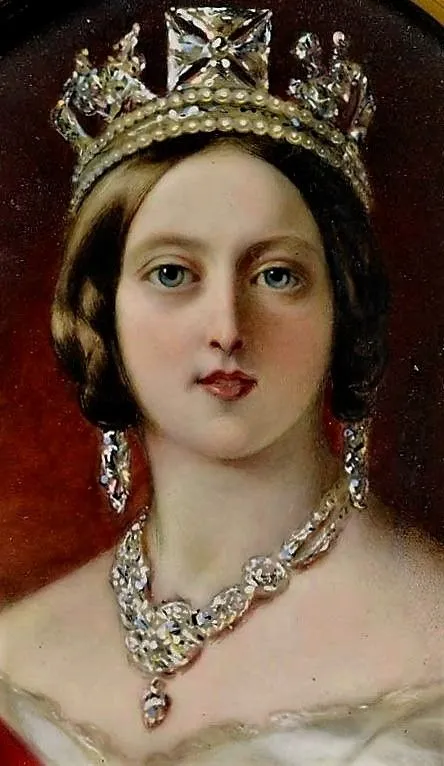 Photo: Queen Victoria, via i.pinimg.com
 Photo: Wenham Lake, via kids.kiddle.co
By the 1850s, the ice trade had spread far beyond Boston. Ships were carrying New England ice to India, Australia, South America, and throughout the Caribbean. In Calcutta, British colonists who had been suffering through the heat were suddenly able to have cold drinks. In New Orleans, the ice trade transformed food preservation, cocktail culture, and the city's entire approach to warm-weather living.
Back home, ice had gone from a luxury to a near-necessity within a single generation. American families began building their routines around the iceman's weekly delivery. Recipes changed. Restaurants changed. The American expectation of cold beverages — something so baked into the culture today that Europeans still find it slightly baffling — was born directly from the ice trade Tudor built.
The Empire That Melted Overnight
Here is where the story takes its sharpest turn.
For all its scale and cultural impact, the ice trade rested on a foundation that could not last. It was, after all, a business built on harvesting a naturally occurring seasonal resource and racing to deliver it before physics won. And physics, eventually, did win — just not in the way anyone expected.
Mechanical refrigeration had been theoretically understood since the mid-1800s, but the technology was slow to commercialize. By the 1880s and 1890s, early refrigeration machines were appearing in breweries and meatpacking plants. By the early 20th century, they were creeping into commercial use. And then, in the 1920s and 1930s, the home refrigerator arrived.
The collapse was not gradual. It was sudden. Within roughly a decade, the entire infrastructure of the natural ice trade — the harvesting crews, the icehouses, the delivery routes, the ships — became obsolete. An industry that had taken the better part of a century to build vanished in the time it took for middle-class Americans to replace their iceboxes with electric refrigerators.
Tudor himself died in 1864, wealthy and celebrated, before the fall came. He never saw what happened to the empire he'd built.
The Legacy That Hides in Plain Sight
The ice trade left fingerprints on American culture that are still visible today, even if nobody connects them back to their source.
The American love of ice in drinks — something that genuinely puzzles visitors from Europe and Asia, where room-temperature or lightly chilled beverages are the norm — traces directly to the habits the ice trade normalized in the 19th century. The concept of the 'icebox,' which survived in American slang as a word for refrigerators long after actual iceboxes disappeared, is another remnant. The entire American expectation that food should be cold, drinks should be colder, and summer should be survivable — all of it was shaped by what Tudor started on a Massachusetts pond in 1806.
The story of the ice trade is, at its core, a story about how a single obsessive person can redefine what an entire civilization considers normal. Tudor didn't invent ice. He invented the idea that ice was something you needed — and then he built a global system to deliver it.
That the whole thing melted away the moment a better technology arrived is almost poetic. The product was temporary. The cultural change it created was permanent.