It Carries Thousands of Commuters Every Day — And It Technically Doesn't Exist on Paper
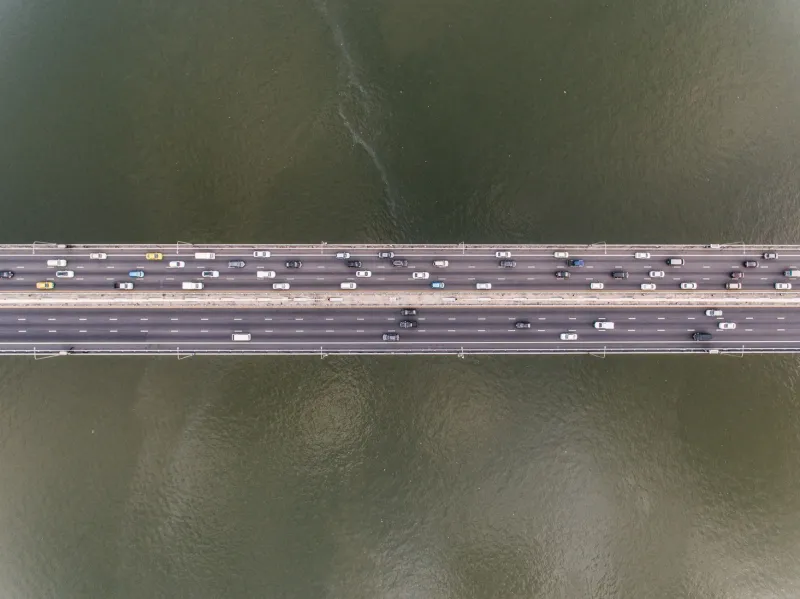
Picture your morning commute. Maybe it involves a bridge — something wide and gray and completely unremarkable, the kind of structure you've crossed a thousand times without thinking twice. Now imagine finding out that bridge, the one you just drove across at 65 miles an hour surrounded by thousands of other cars, was never actually approved to exist.
That's not a hypothetical. It's a situation that has played out in real American infrastructure — a functioning, load-bearing, taxpayer-funded bridge that spent years operating in a kind of bureaucratic no-man's-land, where no single agency could clearly confirm it had ever been officially signed off on.
And the wildest part? Nobody noticed for a very long time.
How a Bridge Ends Up in Legal Limbo
Building a major bridge in the United States is not a simple process. Depending on the waterway involved, the land beneath it, and the highway systems it connects, a project can require permits from a dizzying stack of agencies — the Army Corps of Engineers, the Federal Highway Administration, state transportation departments, local planning boards, and sometimes the Coast Guard if the structure affects navigable water.
Each agency runs its own approval process on its own timeline. Documents get filed, reviewed, stamped, and archived — and sometimes, in the shuffle between jurisdictions, something gets lost. Not misplaced exactly. More like... assumed.
That's what happened here. A regional infrastructure project moved through the early stages of approval with enough momentum that each agency assumed the other had handled the final sign-off. The state transportation authority believed federal clearance was complete. The federal office believed the state had closed the loop. A clerical mismatch in permit numbering meant the two sets of records never properly linked to each other in the first place.
Construction started. Construction finished. The ribbon got cut. Traffic started flowing.
Decades of Daily Use, Zero Official Record
For years — in some documented cases, well over a decade — the bridge existed in a functional sense while remaining absent from the official approval record in a technical one. Maintenance crews serviced it. Weight limits were posted. Emergency vehicles crossed it. Millions of individual trips were made across a structure that, if you dug deep enough into the federal filing system, had no confirmed authorization to span the water it spanned.
The discovery, when it finally came, usually happened one of two ways. Either a routine infrastructure audit flagged an inconsistency in the permit database, or a legal challenge — often from an environmental group contesting a separate project nearby — forced agencies to produce documentation that turned out not to exist in the form anyone expected.
What followed was less a scandal and more a bureaucratic scramble. Engineers were dispatched to confirm the bridge met current safety standards (it did). Lawyers combed through decades of correspondence to reconstruct an approval timeline. Agencies quietly issued retroactive documentation to close the gap.
In other words: the government approved the bridge after the fact, stamped it approved, and filed it away as though nothing unusual had occurred.
This Is More Common Than Anyone Wants to Admit
Here's the uncomfortable truth buried inside this story: the bridge isn't unique. Transportation historians and infrastructure attorneys will tell you, usually off the record, that permit gaps of this kind are not vanishingly rare in American infrastructure. They tend to cluster around a specific era — the postwar highway-building boom of the 1950s through the 1970s — when the country was building roads and bridges faster than the regulatory framework could keep pace.
Agencies were understaffed. Filing systems were paper-based. Jurisdictional boundaries between federal and state authority were still being worked out in real time. Projects that should have required six separate approvals sometimes got built on the strength of two or three, with everyone assuming the rest had been handled somewhere up or down the chain.
Digitizing those old records — a project that's been underway for years but remains incomplete — keeps surfacing these gaps. A permit number that doesn't match. A sign-off date that predates the agency that supposedly issued it. A bridge that shows up in traffic data but not in the federal infrastructure inventory.
What Happens to a Bridge That Technically Doesn't Exist?
Generally speaking, it keeps standing. The practical reality is that demolishing a functioning bridge because of a paperwork failure would be absurd — dangerous, expensive, and deeply unpopular with the hundreds of thousands of people who rely on it. So agencies pursue retroactive compliance, which sounds almost like a contradiction in terms but is a well-established legal mechanism in federal infrastructure law.
The bridge gets inspected, documented, and formally entered into the record. Any missing permits are reconstructed or reissued. A report gets filed. And then, quietly, it becomes just another bridge — unremarkable, load-bearing, and crossed by thousands of people who will never know it spent years existing in a legal gray zone.
Which, when you think about it, is exactly how bureaucracy prefers to handle its mistakes. Not with drama. Just with paperwork, filed very quietly, dated as though there was never any question at all.
The bridge carries the cars. The cars carry the commuters. And somewhere in a federal archive, a form says everything is fine.
It always said everything was fine.