The Typing Machine That Ratted Someone Out in Court
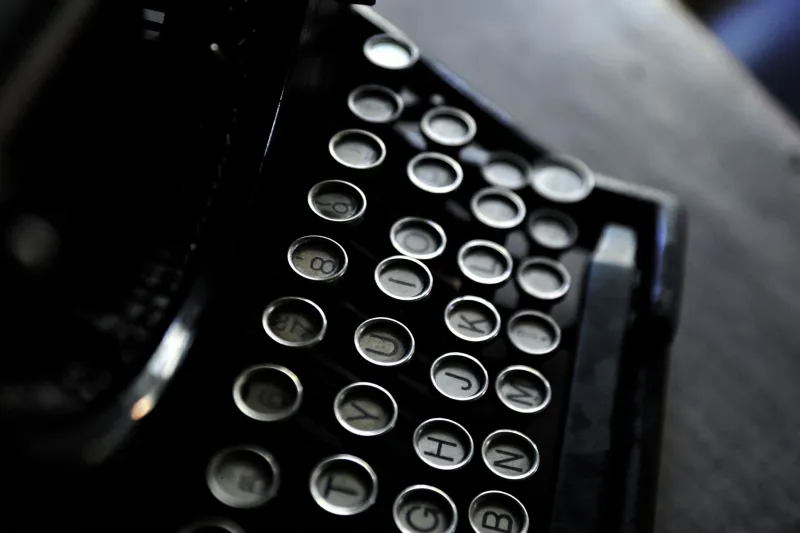
Picture a courtroom in 1952. The lawyers are sharp, the accusations are sharper, and somewhere in the middle of it all sits a battered office typewriter that has no idea it's about to become the most important witness in the room.
This is a story about infidelity, ink ribbons, and the kind of accidental forensic genius that nobody planned for.
A Divorce Case Nobody Expected to Get Complicated
By the early 1950s, divorce proceedings in the United States were a legal minefield. You couldn't simply cite "irreconcilable differences" and walk away — courts required proof of fault. Infidelity was one of the most common grounds, but proving it was another matter entirely. Without photographs, witnesses, or a signed confession, a cheating spouse could simply deny everything and walk out of court relatively unscathed.
In a high-profile 1952 case that wound its way through a northeastern U.S. court, a wealthy businessman's wife filed for divorce on the grounds of adultery. Her husband denied everything. The alleged affair had been conducted discreetly, the paper trail was thin, and the case appeared to be heading toward a stalemate.
Then someone thought to look at the letters.
Every Machine Leaves a Mark
Forensic document examination was not a new science by 1952, but it was still considered a relatively niche specialty. Examiners had long known that individual typewriters develop distinct mechanical personalities over time — worn keys leave lighter impressions, misaligned hammers produce crooked characters, and ribbon wear creates subtle variations in ink density.
What made this particular typewriter extraordinary wasn't wear or age. It was a factory defect that had gone unnoticed for years.
The machine in question — a mid-century commercial model common in American offices at the time — had a subtle misalignment in its type basket that caused a very specific problem: whenever the letter "f" was followed immediately by the letter "i", the two characters would physically collide mid-strike and produce a fused, slightly smudged impression rather than two clean, distinct letters. It was barely noticeable to the naked eye. Most typists assumed it was just a ribbon issue and kept going.
But a forensic document examiner brought in by the wife's legal team caught it immediately.
The Letters That Couldn't Lie
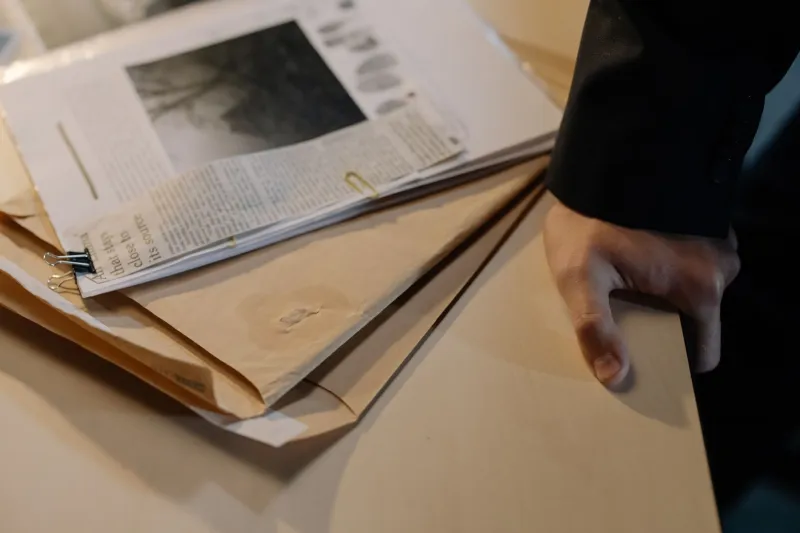
Among the documents submitted as evidence were several letters the husband claimed had been written on his office typewriter — routine business correspondence intended to establish that he'd been occupied with work during the periods his wife alleged he was elsewhere. The letters looked legitimate. The dates checked out. The stationery was professional.
Except every single one of them contained that same telltale smudge wherever "fi" appeared — in words like "office," "confirm," and "financial."
The examiner then cross-referenced those letters with other documents known to have been typed on the husband's office machine. The defect matched perfectly. So far, so ordinary.
The problem arose when the examiner turned to a separate batch of letters — personal notes the husband claimed he'd received from a business associate. These letters also bore the same "fi" smudge. Same machine. Different supposed author. Different supposed location. But unmistakably the same typewriter.
In other words, the husband had typed letters he claimed someone else had written, on a machine he claimed he hadn't been near, at times he claimed he'd been somewhere else entirely.
One mechanical flaw had unraveled an entire alibi.
The Accidental Fingerprint
What made the discovery so remarkable wasn't just that it worked — it was that nobody had engineered it to work. The typewriter wasn't secretly recording anything. There was no hidden surveillance, no cooperating witness. A factory imperfection that the manufacturer would likely have considered a quality control failure had accidentally created what forensic experts later described as a mechanical fingerprint.
The examiner testified at length about the statistical improbability of two separate machines producing the identical defect pattern. The defense had no credible counter-argument. The husband's carefully constructed paper alibi collapsed under the weight of a single misaligned type hammer.
The divorce was granted on the wife's terms.
Why This Story Still Matters
The 1952 case quietly entered forensic document examination literature as an early example of typewriter individualization — the principle that mechanical quirks can tie a document to a specific machine as reliably as a fingerprint ties a smudge to a specific person. It helped lay groundwork for standards that would later be used in fraud investigations, forgery prosecutions, and even espionage cases during the Cold War.
Forensic document examiners today work primarily with digital metadata, printer toner patterns, and laser-jet dot matrices — the modern equivalents of that smudged "fi." But the underlying logic is identical: every machine, no matter how ordinary it looks, leaves a trace of itself on everything it touches.
Somewhere in a courthouse archive, there's almost certainly a stack of yellowed letters with a tiny, fused smudge in the middle of the word "office" — the accidental signature of a machine that had absolutely no idea what it was doing, and did it perfectly anyway.