Declared Dead, Still Breathing — And Somehow Not Paying Taxes Either Time

There's a certain dark comedy in being told you don't exist. Most people would panic. They'd call a lawyer, storm a government office, demand someone fix the paperwork. One Ohio man, however, looked at his death certificate, looked at his tax bill, and apparently decided the government's math was working out pretty well in his favor.
This is the story of how America's patchwork of county clerks, state revenue offices, and federal databases failed so completely — twice — that a living, breathing person slipped through the cracks of the tax system not once but on two separate occasions. And the most remarkable thing about it isn't the audacity. It's how little effort it actually required.
The First Time He Died
The story begins in a mid-sized Ohio county sometime in the late 1980s, when a clerical error at the county clerk's office resulted in a death certificate being filed for a man who was, by every biological measure, doing just fine. The exact cause of the mix-up varied depending on who told the story, but the most credible account points to a shared surname — a common one in the region — and a data entry process that was, to put it charitably, not built for precision.
Once a death certificate enters the system, it fans out like a stone dropped in still water. The Social Security Administration gets notified. State revenue offices update their records. The IRS flags the account. In this case, all of those ripples traveled outward in an orderly, efficient fashion — which would have been impressive if the man at the center of it hadn't still been alive and occasionally filing taxes.
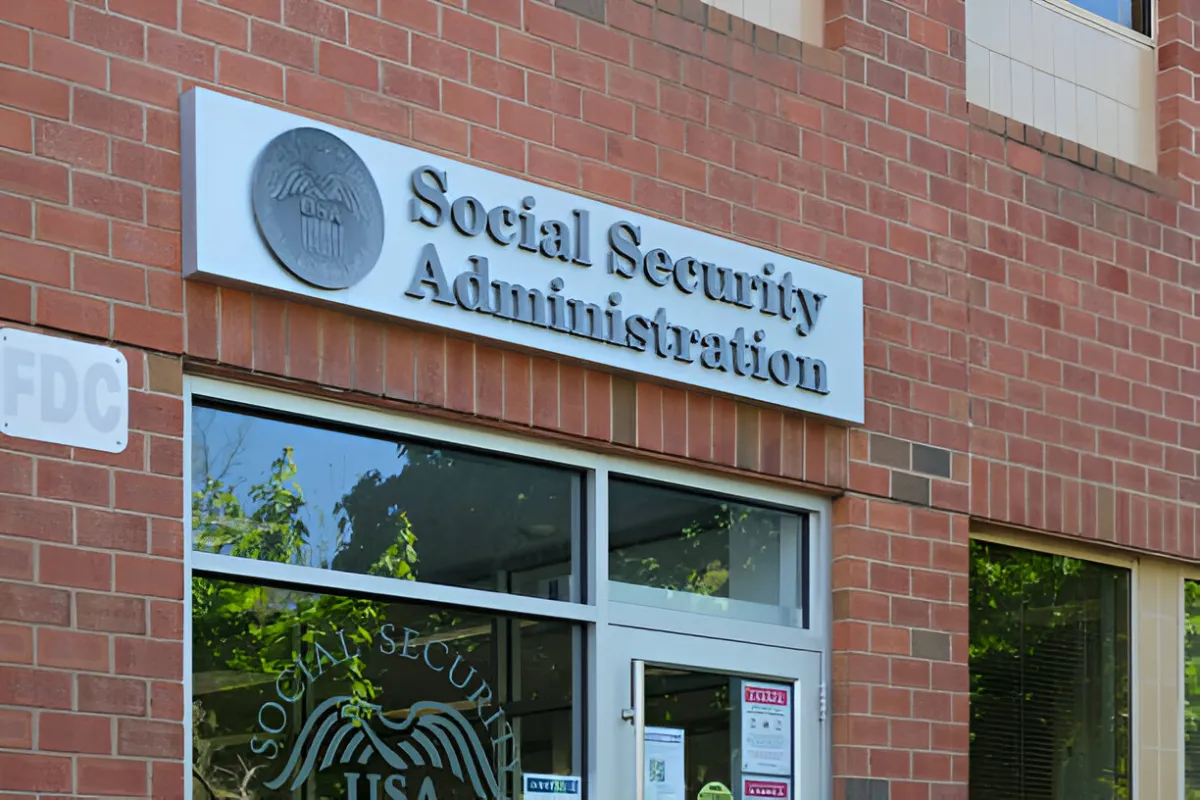 Photo: Social Security Administration, via www.cpapracticeadvisor.com
For a period of roughly two years, the man's tax records sat in a kind of administrative limbo. The state of Ohio believed he was dead. His federal filings, already submitted before the error, sat unprocessed. And because no one was cross-referencing the living against the dead with any particular urgency, nothing triggered an alarm.
When the error was eventually discovered — not by any government agency, but reportedly by the man himself when he tried to renew a driver's license — the correction process was slow, incomplete, and critically, did not result in anyone going back to reconcile the tax years that had quietly slipped by during his official non-existence.
The Second Time He Died
If the first death was a fluke, the second one is where the story gets genuinely surreal.
Years later, during a period of county record digitization — a process that swept through Ohio municipalities in the 1990s as local governments scrambled to computerize decades of paper files — the man's death certificate resurfaced. Somehow, during the migration of old records into the new system, the original erroneous certificate was re-entered as a current record. He was, once again, officially deceased.
This time, the downstream effects were faster and broader. The IRS flagged his Social Security number as belonging to a deceased individual. State tax authorities closed his account. And again, the machinery of correction moved at a pace that could generously be described as unhurried.
By the time the error was caught and the man was formally restored to the living — a process that reportedly required affidavits, in-person visits to multiple offices, and at least one notarized statement confirming that he was, in fact, not dead — another stretch of tax years had passed without a clean, enforceable record attached to his name.
How the System Made It Possible
It would be easy to cast this as a story about one man gaming the government. But that framing misses the bigger, stranger truth: the man didn't build the loophole. The system built it for him.
America's administrative infrastructure for tracking vital records was — and in many places still is — a loose confederation of county, state, and federal databases that communicate with each other imperfectly and on their own schedules. A death certificate filed in an Ohio county doesn't automatically trigger a real-time update at the IRS. It passes through intermediaries, gets batched, sometimes gets delayed, and occasionally gets lost or duplicated.
The Social Security Administration has acknowledged for years that its death records contain errors running into the tens of thousands — living people listed as dead, dead people still listed as living. The so-called "Death Master File" has been the subject of congressional scrutiny precisely because its inaccuracies have real financial consequences, from frozen bank accounts to uncollected taxes.
What made this Ohio case unusual wasn't that the error happened. It was that it happened twice to the same person, in ways that each time created a gap in the tax record that proved genuinely difficult to close retroactively.
What Happened in the End
Authorities did eventually catch up with the situation. Tax liabilities were assessed, and the man was required to account for the years in question. But the process of reconstructing records across two separate administrative failures, across two different decades, and across multiple overlapping jurisdictions, was complicated enough that the final resolution was reportedly partial at best.
No criminal fraud charges were filed, at least none that entered the public record. The prevailing interpretation, based on available accounts, was that the errors had originated with the government, and that the man's culpability was murky enough to complicate prosecution.
Which is, in its own way, the most Ohio-government thing imaginable.
The Lesson Nobody Wants to Learn
This story isn't really about taxes. It's about what happens when the systems we trust to track something as fundamental as whether a person is alive or dead turn out to be held together with the administrative equivalent of duct tape.
The man at the center of it didn't hack anything. He didn't forge documents or bribe officials. He simply existed in the gap between databases that weren't talking to each other — and the gap, as it turned out, was wide enough to walk through twice.
In a country where the government can track a package from a warehouse in Kentucky to a doorstep in minutes, it somehow couldn't confirm, on two separate occasions, that the same man was still alive. That's not a story about one person's luck. That's a story about a system that occasionally forgets you're there — and what that forgetting costs everyone.