The Wilderness Area That Exists on a Technicality — and Thrives Because of It
There's a particular kind of government chaos that produces, entirely by accident, a better outcome than anyone could have planned. Roads that were built in the wrong place and became beloved scenic routes. Zoning laws that were miswritten and accidentally preserved entire neighborhoods. And then there's this: a federal wilderness area that has been protecting land for more than 130 years without the legal standing to enforce a single rule.
It sounds like a loophole that developers should have driven a logging truck through decades ago. Somehow, they never did.
How You Accidentally Create a National Park
The story begins in the bureaucratic scramble of the 1890s, when the federal government was moving quickly — perhaps too quickly — to designate protected lands across the expanding American West. Congress had passed the Forest Reserve Act of 1891, granting the president authority to set aside public lands as forest reserves, and the executive branch was using that authority aggressively. Millions of acres were being designated, surveyed, and filed in rapid succession.
In the chaos of that paperwork blizzard, at least one parcel of land got lost in a very specific way. The designation order was issued. The boundaries were drawn. The land was placed under federal protection. But the legal classification used in the filing didn't match any of the categories established by the enabling legislation. It wasn't a forest reserve. It wasn't a national park. It wasn't a military reservation or a wildlife refuge. The clerk who processed the paperwork had used a classification code that, as far as anyone could tell, didn't correspond to any actual legal category.
The land was protected. The authority to enforce that protection was, technically, nowhere.
The Bureaucratic Black Hole
For the first few decades, it didn't matter. The area was remote, the timber industry had more accessible targets, and the federal presence — however legally questionable — was enough to discourage casual encroachment. Rangers were assigned. Trails were maintained. The land was managed as if the designation were perfectly legitimate, because everyone assumed it was.
The problem only surfaced in the mid-20th century, when a legal review prompted by an unrelated land dispute sent a federal attorney deep into the original designation records. What she found was, by her own account, genuinely confusing. The classification code existed nowhere in the relevant statutes. The land was being administered under a designation that had no legal definition. Technically, the federal agency managing it had no more enforceable authority over the territory than a private citizen would.
She wrote up her findings, flagged the discrepancy, and recommended a formal re-designation to correct the error.
The recommendation was filed. And then, for reasons that remain somewhat murky, nothing happened.
The Accidental Preservation Machine
Here's where the story gets genuinely strange. The clerical error that stripped the area of its legal enforcement authority may have inadvertently made it harder to develop — not easier.
Because the land existed in a bureaucratic gray zone, it also existed outside the normal processes by which federal lands get reviewed for resource extraction leases, logging permits, and mineral rights agreements. Those processes require a clear legal designation to proceed. Without one, the paperwork for any commercial development application had nowhere to go. Requests were submitted and bounced between agencies that each concluded, correctly, that the land didn't fall under their jurisdiction.
Developers who tried to pursue access found themselves in an administrative maze with no exit. The very absence of legal clarity that should have made the land vulnerable had accidentally constructed an impenetrable bureaucratic wall around it.
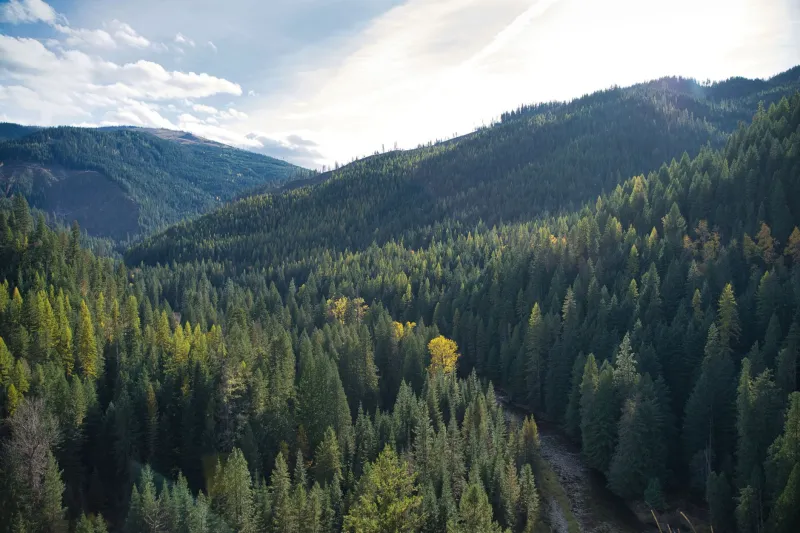
Meanwhile, the ecosystem flourished. With fewer access roads than comparable protected areas, less foot traffic than designated national parks, and a management approach focused on minimal intervention, the wilderness quietly became one of the most intact examples of its particular habitat type in the American West. Biologists who've studied the area describe it as something close to a time capsule — a landscape that looks roughly the way it would have looked before European settlement.
Nobody Wants to Fix It
Periodically, someone at the federal level rediscovers the designation problem and proposes a correction. The process of properly reclassifying the land would be straightforward enough — a congressional action or an executive order could resolve the issue in a matter of months.
Every time it's been proposed, the effort has quietly stalled.
Conservation groups have been notably unenthusiastic about re-designation, partly because the process of correcting the error would require opening the land's status to formal review — which could, in theory, introduce new stakeholders and competing claims. The current situation, however legally absurd, has produced outcomes that a properly designated wilderness area might not have achieved.
Federal land managers, for their part, continue administering the area exactly as they always have, enforcing rules that they may not technically have the authority to enforce, against visitors who don't know the difference and developers who've learned not to bother trying.
The 1890s clerk who made the original mistake almost certainly never knew what they'd done. But somewhere in the American West, a forest full of old-growth trees is standing because of it.