Two Flags, One Hull: The Submarine That Neither Country Will Officially Claim
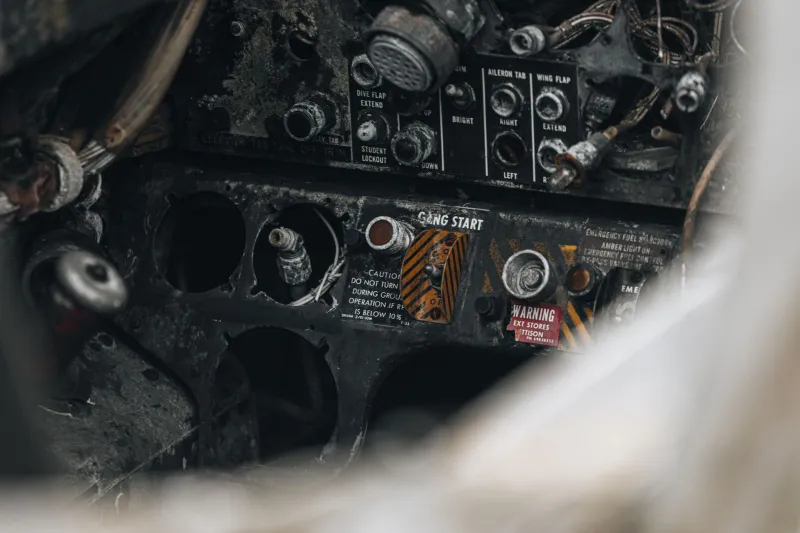
There's an old joke about government efficiency: if two agencies both claim jurisdiction over something, nothing ever gets done. Now imagine that principle applied to an actual submarine. A real one. Sitting in the water. Belonging — legally, simultaneously — to two different countries.
This isn't a thought experiment. It's a genuine artifact of Cold War-era treaty drafting, decommissioning paperwork that got shuffled between ministries, and the kind of bureaucratic inertia that only governments seem capable of sustaining across multiple decades.
How a Submarine Ends Up in Legal Limbo
When military vessels are decommissioned, the process is supposed to be clean. Ownership transfers, assets are catalogued, the hull gets scrapped or turned into a museum, and everyone moves on. But "supposed to be" is doing a lot of heavy lifting in that sentence.
In this case, the vessel — a diesel-electric submarine originally built during the Cold War and operated jointly under a bilateral defense cooperation agreement — was decommissioned in the early 1990s as the political landscape reshuffled. The treaty governing joint operations included detailed language about how shared assets would be handled during active service. It said almost nothing about what happened when the asset simply stopped being useful.
Both nations signed off on decommissioning. Neither signed off on who actually owned the hull afterward.
The submarine was towed to a position in international waters — a temporary measure, supposedly — while the two governments figured out the paperwork. That was over thirty years ago.
The Treaty That Tried to Cover Everything (And Missed This)
International maritime law is layered and, frankly, exhausting. The United Nations Convention on the Law of the Sea, commonly called UNCLOS, governs a lot — but it wasn't designed for the edge case of a jointly-owned warship floating in a bureaucratic holding pattern.
Under one country's domestic law, the submarine qualifies as abandoned state property, which means ownership defaults back to the original constructing nation after a defined period. Under the other country's legal framework, the joint operational agreement created a form of co-ownership that can only be dissolved by mutual written consent — consent that has never been formally requested, let alone granted.
So both interpretations are technically valid. Both governments know this. And both have quietly decided that resolving it would cost more political capital than the rusting hull is worth.
Legal scholars who've looked at the case describe it as a "dormant paradox" — a situation that creates no immediate harm and therefore generates no urgency, but which would become spectacularly complicated the moment anyone tried to do anything with the vessel.
Why Nobody Wants to Blink
Here's where it gets almost comedic. The submarine has no practical value at this point. It's not seaworthy. It's not historically significant enough to anchor a museum. Scrapping it would require both countries to agree on who pays for the process and who gets the proceeds from the salvage — a negotiation that would immediately force them to settle the ownership question they've been avoiding.
So it sits.
Diplomatic sources familiar with the situation — speaking carefully and off the record, because this is apparently still a sensitive topic — have described the arrangement as one that "works best when nobody looks at it directly." One analyst compared it to a crack in a ceiling that homeowners agree not to mention because talking about it means dealing with it.
Both governments have occasionally floated informal proposals. One suggested a joint scrapping operation with proceeds split evenly. The other countered that an even split implied equal ownership, which their legal team wasn't prepared to concede in writing. The proposal quietly died.
What International Law Actually Says
The short answer is: not enough.
Treaties governing military cooperation are generally drafted by people focused on what happens when things are working — not on what happens when they stop. The joint operational agreements of the Cold War era were particularly prone to this gap. They were designed to last until one side or the other terminated them, not to address the slow fade of a vessel that simply outlived its usefulness.
Maritime lawyers who specialize in state property disputes point out that cases like this are rarer than you'd think, precisely because most governments are motivated to clean up loose ends when defense agreements wind down. The fact that this one wasn't resolved is less a legal mystery than a human one: at some point, the officials who understood the situation retired, and the ones who replaced them inherited a problem with no obvious upside to solving.
The Submarine as Metaphor
There's something almost poetic about a vessel designed for stealth ending up invisible in plain sight — technically owned, technically claimed, technically the responsibility of two governments that have both quietly decided to look the other way.
It's not the only example of international property law producing absurd outcomes. History is full of disputed islands, contested airspace, and border anomalies that persist because resolving them requires effort that nobody is willing to expend. But a submarine has a particular quality of concreteness that makes the absurdity land harder. It's not a line on a map. It's a physical object. It takes up space. It exists.
And yet, for the purposes of two governments and their respective legal systems, it might as well not.
Somewhere out there, a decommissioned submarine sits at anchor, flying no flag, claimed by two nations, and ignored by both. The treaties are ambiguous. The lawyers are expensive. And nobody, apparently, is in any hurry.
Which is, when you think about it, exactly how bureaucracies prefer their problems: unresolved, undisturbing, and quietly rusting into someone else's tenure.